They gathered in a major Catholic procession in Barquisimeto, about 170 miles (270 kilometers) west of Caracas, to honor Divina Pastora, a title for the Virgin Mary.
The longing for peace, prosperity and good health comes during a time of political uncertainty following the capture of President Nicolás Maduro on Jan. 3.
After a military operation that took Maduro to the United States, President Donald Trump said that he would run Venezuela at least temporarily and tap its vast oil reserves to sell to other nations. Trump has endorsed Delcy Rodríguez as Venezuela’s acting president.
“We pray for our country, because our country truly needs God,” said housewife Miriam Espinoza during Wednesday’s procession. “May we have peace and may our country return to normalcy.”
The pilgrimage honoring the Divina Pastora takes place every Jan. 14. According to local authorities, the procession draws about 2 million people and stretches roughly 4 miles (7 kilometers).
Mostly dressed in white, pilgrims depart from the Santa Rosa sanctuary and stop at 12 stations along the way before reaching Barquisimeto’s cathedral.
The procession is a cornerstone of Catholic identity in Barquisimeto, drawing generations of families into an annual public expression of faith.
“For us in Barquisimeto, it means everything,” said Johenny Hernández, a civilian engineer who attended the event with several of her relatives. “The Virgin walks with us as we make our way toward Jesus Christ.”
She said she and her brother face health problems that prevented them from walking the whole way. But they decided to attend anyway, praying for a speedy recovery.
Clara Castillo also prayed for her son’s good health and a better future for her country. She said her devotion goes back 39 years, when her son was diagnosed with hemophilia at age 1.
“My faith has been there ever since, and for the rest of my days I will ask God to give me the health I need,” she said. “And today I pray for my beloved Venezuela.”
___
Hernández reported from Mexico City.
___
Associated Press religion coverage receives support through the AP’s collaboration with The Conversation US, with funding from Lilly Endowment Inc. The AP is solely responsible for this content.
CARACAS (AP) – “Can I bring my gun into the worship service?”
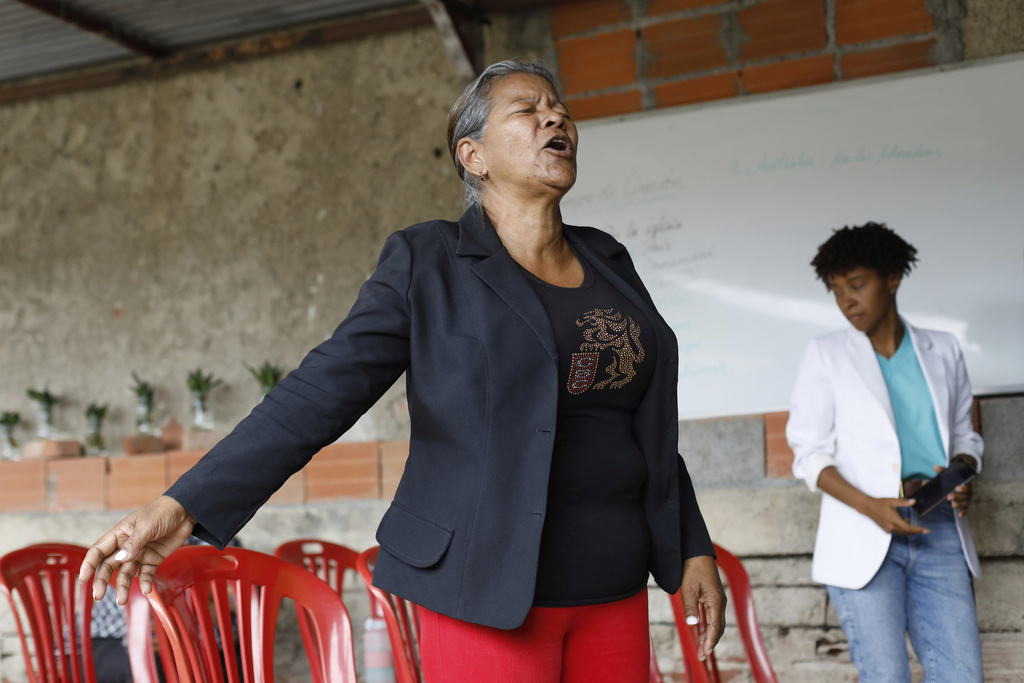
The question presented Venezuelan pastor Fernanda Eglé with a dilemma. Agreeing might have endangered parishioners at her evangelical church in Caracas. But what if dismissing the gang member pulled him farther from God?
“It was risky, but this was God’s plan,” Eglé said. “He knew these people’s hearts, their need for change. So I created a ‘service for criminals,’ intending they would come.”
Many pastors like Eglé provide spiritual guidance in Venezuelan slums affected by crime, drug addiction and gangs. Their task has proven challenging amid the 12-year crisis that stemmed from a drop in oil prices, corruption and government mismanagement.
The economic collapse has forced millions to emigrate since Nicolás Maduro took power in 2013. And despite official claims of decreasing inflation levels in 2024, he declared an “economic emergency” in April, granting himself powers to implement extraordinary measures.
“Working in these communities has been difficult,” Eglé said. “But we need to keep up our work.”
How big is the evangelical community in Venezuela?
Reliable statistics are hard to come by since official figures have not been issued in more than a decade, but academic experts and community members contend the number of evangelicals in Venezuela has grown in recent decades, just as it has in other Latin American countries.
The region’s string of social, political and economic crises is a key driver of that growth, said David Smilde, professor of sociology at Tulane University in New Orleans.
The second issue driving communities to evangelical churches might be the Catholic Church’s priest shortage, which means fewer faith leaders are now serving larger groups of people, said Smilde. With less stringent rules for clergy, evangelical churches can more quickly step into that void.
As for Venezuelans, many find themselves on the margins of survival. “This is a context in which participation in evangelical churches can provide strength, focus and a social network for mutual support,” Smilde said.
Despite the statistical void, the U.S. State Department’s 2023 report on religious freedom estimated that 96% of the Venezuelan population is Catholic — though that may not reflect the rise in evangelicals.
Sociologist Enrique Alí González estimates that the current religious affiliation would be 82%-84% Catholic and 10%-12% evangelical with other faiths accounting for the rest. He based those numbers on his own field work and data from one of the most recent demographic assessments, which was led by the Andrés Bello Catholic University in Caracas in 2016.
A pastor’s role among the people
Like Eglé, pastor José Luis Villamizar encourages Venezuelans to embrace the Gospel as a path to change course.
“We have managed to get people who used to be hitmen away from that lifestyle,” Villamizar said.
Also based in Caracas, Villamizar founded his evangelical church at his house during the pandemic. At first he ministered from a window. As lockdown receded, he took his work to the streets.
Both he and Eglé visit elderly people and Venezuelans lacking basic care on a regular basis.
Mostly dependent on donations or their savings, they deliver food, medicines and clothing. Prayers and religious lectures are followed by recreational activities, financial workshops and barbershop days.
“We joke around, we paint the women’s nails, we try everything to make life a little easier,” Eglé said. “To lift some of the burden of loneliness and depression.”
A welcoming church
At Eglé’s sanctuary, gang members eventually agreed to leave their weapons at the entrance.
“I spoke to many of them and asked: What led you to this life?” Eglé said. “And when they told me their stories, I wept with them.”
Villamizar’s congregation finds temporary homes for those willing to start over and embrace the Gospel. His team monitors their behavior. And like Eglé, he offers support until they find a job and regain self-reliance.
“If we don’t help them get out of their situation, they’ll end up in the same circumstances,” he said.
Maduro has openly associated with evangelicals
In 2023, the president launched a program called “My well-equipped church” to improve evangelical churches with government funding. Some pastors accept the help. Others prefer to find their own means.
Eglé recalled a contribution that helped her acquire chairs and a house that she later turned into a sanctuary. Villamizar opted to remain fully independent.
“They have offered us help, but if the church of God gets tangled in politics, one ends up in debt,” he said. “I prefer Him to provide and, to this day, He has fulfilled.”
Maduro’s outreach to evangelical groups has had little effect on gaining the president more supporters, said Smilde. Politicians are mistaken if they think the structure of independent evangelical churches mirror the hierarchical nature of the Catholic Church, he added.
“The possibilities for politically mobilizing evangelicals is widely misunderstood in Venezuela and consistently overestimated,” Smilde said.
“A year ago there was a lot of concern in Venezuela about Maduro’s outreach to evangelicals being a factor in the election, but it was not, despite considerable effort on his part.”
What Venezuelans find in their evangelical church
Israel Guerra was raised Catholic, but a spiritual crisis led him to become evangelical.
“I made the transition because in Catholicism I never felt supported nor that God loved me,” said Guerra, who attends a Caracas megachurch.
He, too, has noticed the expansion of evangelical churches in Venezuela and says people find them approachable.
“More than being places listing rules to enter heaven, they’re a place of refuge,” he said. “They are safe places for the poor and the rich alike, for former gang members and entrepreneurs.”
Not all congregations are as open or welcoming, said Génesis Díaz, born to evangelical pastors in a church requiring its members to follow strict rules. But their proliferation is nonetheless evident to her.
As a missionary and Christian content creator visiting Caracas congregations on a regular basis, Díaz said she has seen up to 20 evangelical churches in neighborhoods where a single Catholic church stands.
“Venezuela is a Christian, religious country,” she said. “While there are things we have forgotten and bad people are around, there is a very strong awakening towards God.”
____
María Teresa Hernández reported from Mexico City.
___
Associated Press religion coverage receives support through the AP’s collaboration with The Conversation US, with funding from Lilly Endowment Inc. The AP is solely responsible for this content.
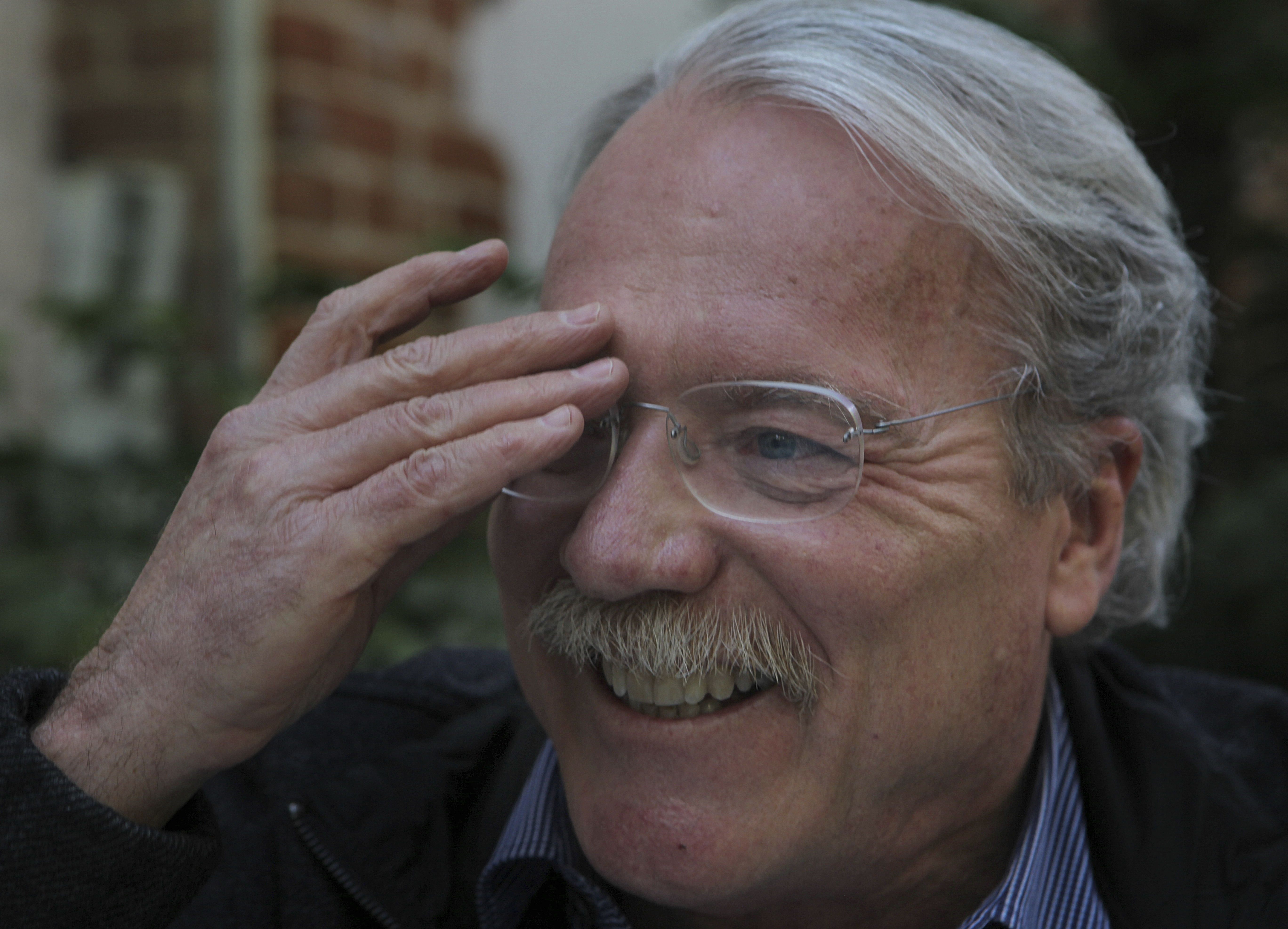
CIUDAD DE MÉXICO (AP) — El hogar que Alberto Barrera Tyszka deja tras de sí al cerrar la puerta, subir a un avión y despedirse de su tierra nunca es el mismo que lo recibe al volver.
Cuando el escritor venezolano pasa algunos meses fuera de Caracas, en el otro hogar que ha formado en Ciudad de México, sabe que su país cambiará día tras día y que él no estará ahí para mirarlo. A su regreso, el bolívar empeorará bajo la asfixia de la inflación, las tensiones políticas serán mayores y la tristeza habrá crecido como una mancha en el rostro de los suyos.
“Cada que voy encuentro un país distinto, sobre todo en términos de la economía. Antes teníamos una crisis económica que iba a una velocidad inmensa con una crisis política que estaba estancada. Ahora las dos van a gran velocidad”, explica Barrera Tyszka en entrevista a The Associated Press.
Aun así, la distancia física nunca lo aleja demasiado de Venezuela. En ocasiones entra y sale de su patria a través de la escritura. Su nueva novela, “Mujeres que matan”, acaba de publicarse bajo el sello de Penguin Random House y explora el alcance que el malestar en las instituciones del Estado puede adquirir hasta permear calles, ánimos y vidas.
Todo arranca con el suicidio de una mujer. “Estaba desnuda, boca arriba. Tenía los ojos abiertos. Sin brillo. Como dos piedras en un vaso de agua”. ¿Por qué se mató? La imagen del cadáver sumergido en una bañera detona la historia y las indagaciones de un hijo por comprender qué ocurrió con su madre rasgan la primera de varias capas que comprenden el libro de 200 páginas.
Una de éstas es el universo de lo femenino, en el que el escritor nos sumerge para indagar en algo que le resulta enigmático, y en las esferas subsecuentes nos lleva a reflexionar sobre el poder, las maneras de encarar el dolor y aquella turbación que despierta en nosotros cuando la justicia es inexistente y se abre la riesgosa posibilidad de ejercerla por propia mano.
Alberto Barrera Tyszka nunca nombra a su país ni al líder socialista que encabeza el gobierno, pero alude a ellos al situar su trama en una metrópoli anónima en la que la prensa ha sido silenciada y las calles alojan familias que buscan comida en la basura. En ese paisaje, un Alto Mando que controla todo afirma que no hay hambre, que ésta es una manipulación mediática, que solo es un invento de los enemigos.
Desde hace varios años, las crecientes confrontaciones entre el gobierno y la oposición de Venezuela han sumido al país sudamericano en la peor crisis de su historia. Hoy el salario mínimo vale casi lo mismo que un kilo de verdura en el mercado, cientos han muerto en protestas callejeras y Naciones Unidas calcula que al menos tres millones de venezolanos han migrado para buscarse una vida mejor.
Al leer “Mujeres que matan” podría pensarse que el autor aspiraba a crear una narrativa que no se viera restringida por su geografía o contexto, pero hay algo más. “No quería que hubiera tantas referencias concretas. No quería hablar de (Nicolás) Maduro, por ejemplo, ni nombrar a ningún político… Siento que esta historia se cuenta sin ese liderazgo y con una corporación que no tiene nombre, que es más siniestra y enigmática”.
Los rostros predominantes de la novela no son los que afligen a la sociedad, sino aquellos que tantean en la oscuridad para intentar sobrevivir a ella. En esa ciudad que el escritor de 58 años decidió no bautizar, cuatro mujeres desoladas por diversos motivos buscan refugio en la burbuja de los libros. Los clubes de lectura en tiempos de crisis pueden ser paliativos y el mismo Barrera Tyszka ha asistido a algunos como invitado desde 2014. Sin embargo, en este caso la literatura cumple una función adicional: transformar a los personajes. De mujeres a lectoras. De lectoras a cómplices. De cómplices a criminales.
“A medida que iba escribiendo me fui dando cuenta de que había un debate moral que tenía yo mismo, que tenían mis personajes y que se iba a traspasar a los lectores”, señala. “Todo gira alrededor del dilema ético de matar: ¿cómo nos enfrentamos a ese verbo?”.
Él, como sus mujeres imaginarias, tampoco sale ileso de un encuentro con las letras. Dice que escribir le sirve para ordenar el caos, para entenderlo: “La escritura sí tiene una función y es terapéutica. Organiza no solo la curiosidad, sino también el dolor”.
De este modo, su novela le abrió la posibilidad de meditar sobre lo que ocurre en las sociedades impunes, cuando quedan pocas opciones para las víctimas que tienen heridas por sanar.
A pesar de que expresa sus ideas en voz alta con claridad, este venezolano que llegó por primera vez a México en 1995 –y además de novelas y textos de opinión redacta guiones de telenovelas– dice que hablar le cuesta mucho. Solía ser tímido, asegura, y siempre ha sentido que solo al escribir puede relacionarse con una realidad que de otro modo podría parecerle desordenada.
“Creo que las cosas que digo es porque en algún momento las escribí o porque algo escribí sobre ellas”, confiesa. “Eso me ayuda a formalizarlas”.
Curiosamente, la Venezuela que uno imagina cuando lo escucha hablar es tan nítida y estremecedora como la que dibujan sus palabras en papel. Quizá por eso la tristeza que transmite cuando describe a gente flaca que camina por las calles de Caracas se despeja cuando su mirada cambia y con una sonrisa delicada afirma que la posibilidad de lograr un cambio a mediano plazo le emociona mucho.
Aunque dice que su país ha vivido al límite por mucho tiempo, piensa que hoy hay dos elementos distintos: un líder opositor no convencional y el apoyo de la comunidad internacional. “Hasta ahora nunca había habido un momento como éste”, señala.
“Mujeres que matan” abre una ventana distinta a la crisis venezolana y muestra que aún quedan varias narrativas por abordar en el país. Aunque el autor piensa que éstas tardarán en convertirse en literatura, confía en que los discursos han cambiado y habrá que esperar. Es y será difícil, asegura, pero su país ha pasado ya muchos años en este proceso y aunque la presión aumente hay ilusiones que no ceden.
La esperanza en Venezuela, dice, ha aprendido a habituarse a los desafíos.
 mthernandezr.com