Catholic Italy’s Olympic host cities offer different access for Muslims to observe Ramadan

Imam Abd al-Basit calls to prayer at the Al-Wahid mosque during Ramadan in Milan, Italy, Friday, Feb. 20, 2026, as the city hosts the Winter Olympics. (AP Photo/María Teresa Hernández)

Published by The Associated Press, February 2026

MILAN (AP) – This year’s Olympic and Paralympic Games are located in Italy, a historically Catholic nation. And they coincide with Ramadan, the Muslim holy month that’s a time for dawn-to-dusk fasting, religious reflection and communal celebration.

One of the two host cities, Milan, is multicultural and cosmopolitan, and there are Islamic centers and mosques spread around the city to gather and worship. At least one is welcoming people of other faiths wishing to partake in iftar dinners, when Muslims break their daily fast. 

Up in the mountains, around the village of Cortina d’Ampezzo, prayer spaces are harder to come by. Still, Muslim residents in the area over recent years have been carving out their communities.

Here’s how some Muslims are observing Ramadan in Milan and Cortina: 

A mosque welcoming members of all faiths

Milan’s Al-Wahid mosque is opening its doors during Ramadan, inviting guests to share the breaking of the fast and evening prayers. Near Milan’s Navigli district, it has been officially recognized as a place of worship by the city since 2000.

Fridays — the weekly day of congregational prayer in Islam — draw larger crowds to mosques. On those days during Ramadan for the last few years, Al-Wahid welcomes guests from the municipality, local institutions, the Catholic Church and other religious communities. Interfaith iftars have become common in many parts of the world, including Muslim-majority countries such as Indonesia and Pakistan, and in Australia and the United States, where Muslims are a relatively small minority.

Al-Wahid’s open gatherings aren’t specifically for Olympic visitors, though they are scheduled weekly through March 14 — the day before the Paralympics end.

“The Olympics are a symbolic moment,” Imam Yahya Pallavicini, vice president of a national Islamic religious association known by its acronym COREIS, told The Associated Press. “Sport, culture and art can help reduce prejudice and fear toward a particular culture or religious identity.”

At sunset on Feb. 20, a few dozen Muslim worshippers stood shoulder to shoulder beneath a row of hanging lamps. They waited for the call to prayer before breaking their fast with dates offered on silver plates. Then they sat on the floor to share lentils, rice, meat and water before ending the evening with prayer. 

A 2025 report by a Milan-based migration research institute, ISMU, estimates that almost 400,000 Muslims live in Lombardy, the Italian region with the biggest immigrant population and which includes Milan, Italy’s second-most populous city. The largest groups come from Morocco and Egypt, it said.

Pallavicini said the community also includes people from Bangladesh, Pakistan and Bosnia, among others.

Mountain towns, not many mosques

In the other Olympic host city, Cortina, at an elevation of about 1,220 meters (4,000 feet), eight Muslim people told the AP that finding a place to pray has proven challenging. 

The upscale mountain town, known as the Queen of the Dolomites, is home to a little over 5,000 people. About half its population is part of Italy’s Ladin minority, which settled the mountain hamlet of Anpezo a millennium ago. 

Rabah Boubegtiten, who traveled to work in the Olympics as a driver with Qatari security, said his drive to Brunico — the location of the nearest mosque he could find — took over an hour on a bad road. He found it using social media, having failed to locate one using Google, he added.

“There are many nationalities here, many Muslims from various countries: Algerians, Tunisians, other Africans, and many Qataris, because we are working with them during the Winter Olympic Games. They look everywhere to find a place to pray, but it’s almost impossible,” Boubegtiten, 52, who lives in Paris and is originally from Algeria, said. «For us, it’s really difficult. Sometimes, even if we want to come, we simply can’t.»

An interfaith prayer room is available at each residential village for athletes across the spread-out Games, but they are not accessible to the general public.

Elsewhere in the Dolomites, residents have been making their own spaces. They said there are sufficient places to worship around Brunico, which itself has about 17,000 people, as well as halal butchers and shops to accommodate the local Muslim population. 

Around 120 people attended the Friday prayer in Brunico, sitting on the crowded floor in a room surrounded by curtains and listening to a sermon in Italian. Afterward, they were asked for donations to help cover the space’s rent and utility bills.

“In Italy, Ramadan is not an impossible thing. It is possible to practice Ramadan, it’s possible to pray,” said Kreem Wardi, whose father is Muslim from Morocco and mother is from Italy and Catholic. «It is not easy to find a mosque everywhere in Italy. But in this area, we are fine for now, inshallah.”

Wardi, a 20-year-old student, noted that in Brunico it’s uncommon to invite non-Muslims to iftar dinners or share Ramadan traditions.

“They maybe don’t want to talk about Islam. It’s not that they hate us Muslims, but it’s just that they are maybe not interested, so we don’t want to force it upon them,” he said.

A more diverse Italy

While the vast majority of Italy’s 59 million people are baptized Catholic, about three-quarters identify with the religion and far fewer regularly attend church.  Muslims number 1.7 million, accounting for over 30% of the foreign resident population for the first time, ISMU, the migration research institute, said in July.

Migration over the past decade has stirred right-wing, anti-immigrant sentiment in some parts of Europe. Italian Premier Giorgia Meloni, who heads the far-right Brothers of Italy party, pledged a crackdown on migration after taking office in 2022, with the goal of deterring would-be refugees from paying smugglers to make the dangerous Mediterranean crossing.

A large portion of today’s Muslim population in Italy are migrants, but there is a growing number of second-generation Italian Muslims, converts and people born in Italy, Pallavicini said in Milan. 

When the call to prayer finally echoed through the Al-Wahid mosque close to 7 p.m., men and women bowed in unison, their foreheads close to the floor.

Amina Croce, 28, was one of them. Born to Italian Catholic parents who converted to Islam and raised her as a Muslim, she said the mosque «has been a very significant part of who I am.” 

Beyond religious observance, Croce added, she sees the faith as part of Europe’s history.

“We believe this diversity is part of Italy’s broader cultural heritage,” said Croce, who leads the youth division of COREIS. “It may still be underappreciated, but we hope it will be recognized more in the future.”

___

Bwaitel reported from Cortina d’Ampezzo, Italy.

___

AP Winter Olympics coverage: https://apnews.com/hub/milan-cortina-2026-winter-olympics

___

Associated Press religion coverage receives support through the AP’s collaboration with The Conversation US, with funding from Lilly Endowment Inc. The AP is solely responsible for this content.
Olympics visitors are invited beyond the Duomo to Milan’s other stunning churches

Sara Cainarca, a volunteer with the “La Via della Bellezza,” or “The Path of Beauty,” initiative, gestures toward a fresco in the church of San Giorgio al Palazzo, in Milan, Italy, Wednesday, Feb. 18, 2026. (AP Photo/María Teresa Hernández)

Published by The Associated Press, February 2026

MILAN (AP) – Away from the crowds swarming Milan’s Duomo during the Winter Olympics, young volunteers have been steering visitors toward the city’s lesser-known churches, inviting them to discover their sacred heritage.

Known as “The Path of Beauty” (“La Via della Bellezza” in Italian), the initiative began in 2020 as a project of the archdiocese’s youth ministry office. It typically offers visits on weekends, but the schedule extends to weekdays during the Games and runs through March 15.

“The idea is to welcome visitors inside these churches and invite them to rediscover an artistic beauty that we inherit from the past, but that still speaks today,” Sara Cainarca, who coordinates the team hosting the visits, told The Associated Press on Wednesday.

Faith through art

Between 15 and 20 people are involved in the archdiocese’s project, each specializing in one or two churches in Milan. The short visits are offered to a dozen Catholic sanctuaries across the city.

Volunteers wait for visitors inside their assigned church. Emphasizing they are not certified tour guides, they offer a free introduction to the history and sacred art of each building.

During the Olympic weeks, volunteers say they have welcomed visitors from the United States, France, Germany and Spain, some drawn to the city for the Games and others simply curious to explore beyond its best-known landmarks.

Giovanna Giuditta Mazza is an art history student who joined the initiative two years ago. She offers visits in English, French and Italian and is mostly based in the Basilica of San Lorenzo Maggiore, which dates back to the late 4th and early 5th centuries, making it one of the city’s oldest churches.

“When people enter the church, they often do not know what to expect,” said Mazza, 22. “But when they leave, I see a sparkle in their eyes and that is precious to me.”

For her and other volunteers, these encounters become an opportunity to speak about their faith.

“Beauty is not just about art,” said Víctor Ortíz, a 22-year-old student of cultural heritage. “It is also about the Word of God.”

The church of Santa Maria presso San Satiro is best known for the illusion created by Renaissance architect Donato Bramante, who designed a trompe-l’oeil apse to compensate for limited space. 

Ortiz, who often gives guides there, explains to visitors how the site had also been linked to a 13th-century miracle, in which an image of the Virgin Mary was said to have bled after being stabbed.

“The growing devotion surrounding that event eventually led to the construction of the church in the 16th century,” he said.

Training and tradition

“La Via della Bellezza” began as training sessions in which university students from the Lombardy region explored the relationship between art and spirituality. Volunteers then spread to cities like Brescia or Bergamo, where churches and basilicas are known for their rich Romanesque and Baroque art.

“The idea is to accompany visitors so they move from being tourists to becoming pilgrims who discover a deeper desire within themselves,” said Cainarca, 26.

Volunteers meet at least once a month with experts who provide additional training in art history and other topics. Additionally, the group travels to nearby places to deepen their understanding of both artistic heritage and the spiritual traditions behind it. They will soon head to Ravenna, home to a series of Christian monuments famed for their mosaics that has been recognized as a World Heritage by the U.N. cultural agency UNESCO.

Milan, though, is Cainarca’s favorite city to work in. She says its churches are part of the city’s identity and that its patron, Saint Ambrose, shaped a vision of community and collaboration.

“Today, Milan is known for fashion, shopping, finance and skyscrapers,” she said. “These churches offer a moment of pause, contemplation and discovery.”

___

AP Winter Olympics coverage: https://apnews.com/hub/milan-cortina-2026-winter-olympics

___

Associated Press religion coverage receives support through the AP’s collaboration with The Conversation US, with funding from Lilly Endowment Inc. The AP is solely responsible for this content.

‘Adopt a Statue’ program for Milan’s iconic Duomo restores centuries-old marbles

A detail of Milan’s Duomo cathedral is pictured at the 2026 Winter Olympics, in Milan, Italy, Sunday, Feb. 15, 2026. (AP Photo/Antonio Calanni)

Published by The Associated Press, February 2026

MILAN (AP) – A 15th-century statue that once stood outside Milan’s iconic Duomo has found a new home.

The Bearded Saint with Book was recently restored under the “Adopt a Statue” program, launched in 2020 by the centuries-old institution that oversees the cathedral’s conservation. As of Feb. 13, it is on display at Piazzale Cadorna, behind a glass window at the headquarters of FNM, a Lombardy-based transport company.

The program recruits donors — either companies or individuals — to fund restoration of a statue under a loan agreement that allows it to occasionally be displayed outside the Duomo.

“The uniqueness of this project is that statues that would otherwise remain in our deposits are restored and brought back to their original beauty,” the program’s project manager, Elisa Mantia, said in an interview with The Associated Press. “In that way, they can continue to tell the story of the Duomo even in places that are far from the monument.”

These agreements are in some cases granted for an initial one-year term and may be renewed. The initiative follows previous fundraising campaigns in which donors could adopt gargoyles or spires in exchange for inclusion in the Duomo’s donor register, where contributors’ names are recorded as part of the cathedral’s long history of support.

From storage to public display

The construction of the Duomo began in 1386, under the rule of Gian Galeazzo Visconti, then lord of Milan, in collaboration with the city’s archbishop. The cathedral was built on the site of two preexisting basilicas and its completion took more than five centuries. One of its bronze doors was not installed until 1965.

Because construction spanned centuries, the Duomo’s statues were carved by artists from different regions and periods, resulting in a monument that reads as a timeline of evolving artistic styles.

The Veneranda Fabbrica del Duomo, which oversees the cathedral’s conservation, has sought funding to restore statues removed over the centuries for maintenance or safety reasons.

“Culture can save the world,” Andrea Gibelli, president of FNM, said during a press conference on Feb. 13 to mark the unveiling of Bearded Saint with Book. “We want to spread the cultural riches we are fortunate to have, which are often overlooked or not fully appreciated.»

Other sculptures adopted under the program by different sponsors have included a 16th-century David, a depiction of Samson and the Lion, and a statue of Saint Matthew the Apostle.

While the number of adopted statues isn’t disclosed and not all are displayed in public spaces, Mantia said that her institution has preselected around 30 sculptures as eligible for restoration. Each case must be authorized by Italy’s cultural heritage authorities, as the process involves a formal loan agreement subject to conservation, insurance and transport regulations.

“We usually select them because they are very beautiful and not so damaged that they would be unsafe to loan,” Mantia said.

Once a donor reaches out, experts like Mantia accompany them to the Duomo’s storage facilities to choose a sculpture. After it is selected, restoration typically takes between one and three months.

Centuries-old marble

Bearded Saint with a Book was originally displayed outdoors. Aside from a black crust from air pollution on its surface, it had no structural damages preventing its loan.

“This often involves only surface finishing or an intervention with compresses or mechanical cleaning,” Mantia said.

The marble used for both the statues and the Duomo itself comes from the quarries of Candoglia in Italy’s Piedmont region. The same stone has been used since the late 14th century, under the supervision of the Veneranda Fabbrica del Duomo.

“Beyond being the symbol of Milan, the Duomo is also a symbol of its history,” Mantia said. “It is a monument that grew together with the city, that tells within itself, in its statues and in the style with which it is decorated, the entire history of the city.”

___

Associated Press religion coverage receives support through the AP’s collaboration with The Conversation US, with funding from Lilly Endowment Inc. The AP is solely responsible for this content.
During the Winter Games, some Milan churches are teaching Olympic values to thousands of kids

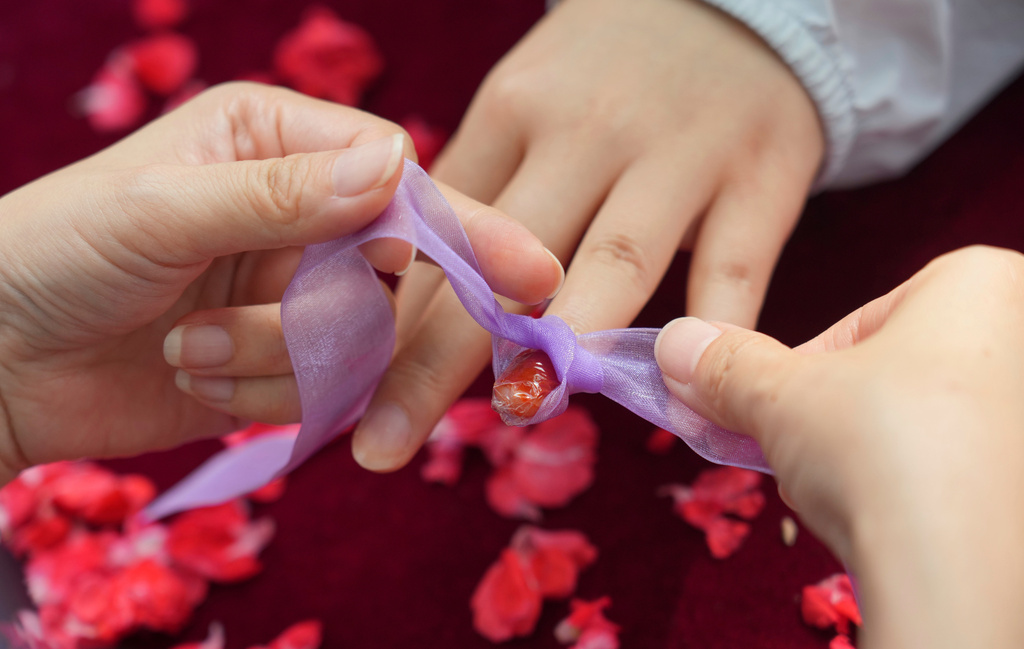
Children receive snowflake-shaped medals inspired by the 2026 Winter Olympics during an activity organized by a parish oratory connected to the Church of Santa Eufemia in Milan, Italy, Monday, Feb. 9, 2026. (AP Photo/María Teresa Hernandez)

Published by The Associated Press, February 2026

MILAN (AP) – Olympic podiums are where the world’s best athletes win gold. But beyond the spotlight of the 2026 Winter Olympics, dozens of children on Feb. 9 received snowflake-shaped medals of their own in a Milan church — a reminder that they, too, are champions in life.

“This is not about changing lives through elite performance,” said Valentina Piazza, project manager for CSI for the World, which operates outside Italy to provide sports programs to children in developing countries. “It’s about how sport helps young people learn from being together.”

Piazza’s work is part of the Tour of Sports Values, an initiative led by the Catholic Archdiocese of Milan during the Games. With workshops, exhibitions, athlete testimonies and sports activities, the initiative seeks to promote excellence, friendship and respect.

The program is anchored by a series of letters written by Milan’s Archbishop Mario Delpini, who has drawn on those values in recent years as part of preparations for the Games.

It aims to involve about 13,000 young people from schools, parish youth centers and sports clubs across the archdiocese through Feb. 20.

From Olympic podiums to parish benches

The Tour of Sports Values kicked off on Feb. 9 at the Church of Sant’Antonio, near Milan’s Duomo.

Dozens of children sat quietly on the benches of the Roman Catholic church rebuilt in the late 16th century. After a brief introduction to the program, they met Giordano Bortolani, a basketball player who came up through the youth system of Olimpia Milano, a professional basketball club, and has played in Italy’s top and second divisions.

“Since becoming a professional athlete, I often go around talking to kids,” said Bortolani, who has also engaged in activities organized for people with disabilities within programs of Milan’s Catholic Church.

“With the Winter Olympics happening here in Milan, it’s all about Olympic values,” he added. “The values of sport, and of life as well.”

Behind him hung banners showcasing graphic designs created by students in their final year of high school, highlighting Olympic-inspired principles.

The works interpret those themes by linking past and present, using the Milan Cortina Winter Olympics as a common framework.

“The idea is to rethink sport not only as competition or performance, but also as a vehicle for ethical principles such as cooperation, respect, solidarity and inclusion,” said Matilde Napoli, deputy head of the school. 

Where Olympic values meet everyday life

Initiatives like the Tour of Sports Values unfold largely in oratories, an Italian model of parish spaces where children and teenagers gather after school for sports and recreational activities.

The program is supported by the foundation of Milan’s oratories, known by its Italian initials, FOM, which coordinates these programs across the Milan archdiocese.

During the Winter Olympics, those everyday settings are being used to connect the Olympic spirit with daily life, turning familiar church spaces into classrooms for sport, reflection and community.

“Oratories are places where young people can come together,” said Napoli. “They offer opportunities for social interaction through sports, recreational and leisure activities.”

Aside from teachers, volunteers and athletes, FOM and Catholic leaders rely on organizations like CSI and local sports clubs to bring faith and sports together with youths. According to Massimo Aquino, president of CSI, Milan’s archdiocese oversees almost 1,000 oratories.

“The most beautiful thing is that, for generations, Italians have grown up learning the values of life in oratories, chasing after a ball,” Aquino said. “From this experience of sport born in oratories, many champions have emerged and grown.”

Where champions begin

Among them, Aquino added, are Antonio Rossi, one of Italy’s most celebrated canoeists and a five-time Olympic medalist, including three golds, and printer Filippo Tortu, who was part of Italy’s gold-winning 4×100-meter relay team at the Tokyo Olympics.

Bortolani himself shares this background. His first encounter with sport, he said, was at age five in an oratory. “Church was part of it,” Bortolani said. “Sometimes, between training sessions, they would take us to pray.”

Later he married, joined Olimpia Milano and became a professional athlete. But oratories have never been far from his heart.

“There is a beauty in sport itself, but sometimes a young person may be interested in hearing the point of view of an athlete,” Bortolani said. “That’s how it was for me when I was younger.”

___

AP Olympics: https://apnews.com/hub/milan-cortina-2026-winter-olympics

___

Associated Press religion coverage receives support through the AP’s collaboration with The Conversation US, with funding from Lilly Endowment Inc. The AP is solely responsible for this content.
Winter Olympics exhibition offers a glimpse behind the opening ceremony in Milan

Italian photographer Giampaolo Sgura attends the opening of “REHEARSAL – Before the Applause,” his photographic series documenting rehearsals for the opening ceremony of the 2026 Winter Olympics, in Milan, Italy, Thursday, Feb. 12, 2026. (AP Photo/María Teresa Hernández)

Published by The Associated Press, February 2026

MILAN (AP) – An exhibition that opened Thursday in Milan features a behind-the-scenes look at the moments preceding the Winter Olympics opening ceremony.

“REHEARSAL — Before the Applause,” at Palazzo Castiglioni, features 39 images taken by Italian photographer Giampaolo Sgura, who was granted rare access to intimate moments involving more than 1,200 volunteers during dress rehearsals ahead of the Feb. 6 opening ceremony.

“These volunteers are all together to perform, so I think it is all connected to the spirit of sports and in this case the Olympics,” Sgura told The Associated Press in an interview. “Maybe they don’t have to perform to win, but for the sake of creating something emotionally entertaining and beautiful.”

Sgura, a renowned fashion photographer who has worked for magazines such as Vogue and brands like Dolce&Gabbana, said working with subjects not used to being photographed offered him a different perspective on human nature. 

“The main thing I was photographing was their passion, their professionalism, their desire to be there and communicate a sense of happiness,” he added.

His photographs, displayed on the stairs of the palace located in Milan’s Porta Venezia district, showcase performers in bright, intricately designed costumes, while designers, creative directors, stagehands and craftspeople work to ensure the ceremony unfolds seamlessly. It runs through Feb. 17.

Behind the exhibit is the Olympic Museum in Lausanne, Switzerland. Its director, Angelita Teo, told the AP that Sgura’s photographs are key to conveying how the effort and dedication of hundreds of people make the spectacular event possible.

“We really value volunteers at the Olympic movement and this is a way for us to give back to them,” Teo said. “The Olympic movement is always about more than competition. It is about humanity, about people coming together and making something that will make a difference.”

The show fits into the museum’s ongoing efforts to interpret Olympic values through contemporary art. Once it closes in Milan, on Feb. 17, the photographs will become part of its permanent collection.

___

AP Olympics: https://apnews.com/hub/milan-cortina-2026-winter-olympics

____

Associated Press religion coverage receives support through the AP’s collaboration with The Conversation US, with funding from Lilly Endowment Inc. The AP is solely responsible for this content.
Catholic cross like no other is a beacon of unity in Olympic host city Milan

The “Cross of Athletes” is seen during a Mass at the Basilica of San Babila, known as the Church of Athletes during the 2026 Winter Olympics, in Milan, Italy, Saturday, Feb. 8, 2026. The cross travels to Olympic host cities as a symbol of faith, unity, and the values of sport. (AP Photo/María Teresa Hernandez)

Published by The Associated Press, February 2026

MILAN (AP) – Much like the Olympic flame, there is another symbol of triumph and transcendence — far less known — that graces one host city after another: a one-of-a-kind, wooden cross. 

The Cross of the Athletes has arrived in Milan for the Winter Games and holds pride of place beside the main altar in the Basilica of San Babila. It is one of the city’s oldest churches that — for a few weeks, while the cross is within its walls — holds the title of Church of Athletes. 

The presence of the cross at the Games is a tangible sign of the Catholic Church’s belief that sport is a powerful way to bring people together. And this cross is unique in that it is made from pieces of wood sourced in five continents, an apparent nod to the five Olympic rings that convey the same sentiment. 

“We think of sport not as an instrument that separates, but as one that unites,” said the Rev. Stefano Guidi, who heads the Archdiocese of Milan’s Service for Oratories and Sport. “The cross represents this precisely through the way it was created.”

The making of the cross

English artist Jon Cornwall used 15 pieces of wood from continents around the world to craft the cross, which made its grand debut at the London Olympics in 2012. 

Since then, special ceremonies have marked its arrival to host cities for both the Summer and Winter Games. (The exception was Tokyo, when pandemic travel restrictions were in place.) Last June, it was in the Vatican for the Jubilee of Sport, celebrated with Pope Leo XIV, who has a long-standing personal connection to sport. And the cross is expected to travel to Los Angeles for the 2028 Games.

“The cross — carrying the prayers and hopes of athletes — is a Christian message addressed to the entire world of sport, a sign of hope for humanity, and a proposal of peace among peoples,” according to a document from the Vatican’s culture ministry, which includes a sports department.

Leo said in a message entitled “Life in Abundance” issued on the same day as the Milan Cortina opening ceremony, that sport brings people together and values the journey as well as the end result.

“It teaches us that we can strive for the highest level without denying our own fragility; that we can win without humiliating others; and that we can lose without being defeated as individuals,” he wrote.

On a recent February morning, Giovanna Spotti and her husband attended Mass at San Babila and took a moment to closely admire the cross.

“The Cross of the Athletes moves us a great deal, because it is displayed and venerated here,” said Spotti, who lives nearby. “And San Babila is important because it is a very old church, truly characteristic of Milan.”

A message of unity beyond language

The Romanesque basilica sits in the heart of the city near Piazza San Babila, a major transit and meeting point. Milan’s Catholic archdiocese has designated it the Church of Athletes during the Olympics and Paralympics. 

As part of the church’s activities for this period, it is celebrating some Masses in Italian, English, French and German.

The church was packed during the first Mass on Feb. 8, in Italian. The homily focused on the importance of embracing fraternity over individualism and fostering a spirit of unity beyond divisions.

Later, the Rev. Stefano Chiarolla celebrated a German-language Mass. All attendees were Italian, but Chiarolla said the initiative is important nonetheless.

“Multilingual Masses are a sign of welcome,” said Chiarolla, who asked German speakers to raise their hands at the end of his homily and smiled when merely one Italian man did. “People can always attend Mass in Italian, but the diocese wants to offer a visible sign of hospitality that reflects the international nature of the event.”

Marino Parodi, who raised his hand, said he attended because family issues prevented him from coming to the earlier service.

“I searched on the web and I found this option,” he said. “I was glad to find it.”

Both the display of the cross and the multilingual Masses are part of the Milan archdiocese’s efforts to promote unity during the 2026 Winter Olympics. That broader program includes a youth-focused “Tour of Sports Values,” cultural exhibitions, a theatrical performance, concerts and inclusive sports initiatives, as well as art routes through some of Milan’s historic churches.

___

AP Olympics: https://apnews.com/hub/milan-cortina-2026-winter-olympics

___

Associated Press religion coverage receives support through the AP’s collaboration with The Conversation US, with funding from Lilly Endowment Inc. The AP is solely responsible for this content.
Olympic art project in a Milan park invites the public to ‘reflect’ on the Games’ spirit

A view of a mirrored flower bearing a handwritten message as part of “Together to Reflect,” an interactive community art project by BAM, the acronym for Biblioteca degli Alberi Milano, a public park in central Milan inviting the public to share thoughts on the values of sport, during the 2026 Winter Olympics, in Milan, Italy, Sunday, Feb. 8, 2026. (AP Photo/María Teresa Hernández)

Published by The Associated Press, February 2026

MILAN (AP) – A project in Olympics host city Milan has invited parkgoers to reflect on the values of sport — both figuratively and literally.

“Together to Reflect” was conceived as a collective artwork that takes shape as slender stakes topped with mirrors, on which people write their thoughts about sports and the Games. 

Anthony Cardamone was scrolling through Instagram when the initiative caught his eye. That prompted him to head to a corner of the public park known by its Italian acronym BAM with his wife and 7-year-old daughter on Sunday. It was the only day scheduled for people to write their messages.

“For me, sport is about being together, it’s about sharing and measuring your own abilities,” said Cardamone, whose daughter wrote the word “brave” on one of the dozens of mirrored flowers.

“This activity helps her understand why sport is important and how beautiful it can be,” he added. 

The project was developed by BAM and NABA, Milan’s academy of fine arts.

“When people think about the Olympics, they often think only about sports, but the Games are not just about the athletes and the medals,” said Francesca Colombo, BAM’s cultural general director. “They are about values and this is where culture is so powerful; because through art — music, dance, ballet — it can transmit these values.”

Roberta Massaccesi, a sports enthusiast who happened to be strolling through BAM when she spotted the mirrors, said her son asked to participate. He made a drawing expressing that sports are good for everyone.

“We just went to a hockey match and it was the first time for me and him to join an Olympic event,” Massaccessi said. “It was amazing!”

Students from NABA were among volunteers at the exhibition. Professor Chiara Vico said the mirrors enable people to see their face as they share their thoughts.

“The idea is that, for a moment, the written thoughts and the person expressing it overlap,” Vico said. “So your reflection and your message become one.”

___

AP Olympics: https://apnews.com/hub/milan-cortina-2026-winter-olympics

___

Associated Press religion coverage receives support through the AP’s collaboration with The Conversation US, with funding from Lilly Endowment Inc. The AP is solely responsible for this content.
Tourists stopped from seeing The Last Supper, while Olympic VIPs including Vance visit

FILE – Leonardo da Vinci’s «Last Supper,» created between 1494 and 1498, is pictured in the refectory of the Convent of Santa Maria delle Grazie in Milan, Italy, Feb. 9, 2021. (AP Photo/Antonio Calanni, File)

Published by The Associated Press, February 2026

MILAN (AP) – Tourists to Milan during the Winter Olympics hoping to see Leonardo da Vinci’s “The Last Supper” were in for an unwelcome surprise: Access to the masterpiece is closed to the public for 3 1/2 days.

The painting, created between 1494 and 1498 by the Italian Renaissance artist, is located on a wall inside the refectory of Santa Maria delle Grazie, a church and Dominican convent still used by friars. It is a major attraction for appreciators of art and devout Catholics alike.

Tourists stuck at the police cordon down the street leading to Santa Maria delle Grazie were disappointed. Antonio Rodríguez, who traveled from Spain with friends, said they would have no other chance to see the painting nor the adjacent church since they only traveled for the weekend.

“We didn’t know we would face this,” said Rodríguez, adding he had no plans to attend events related to the Games. «We would have gone somewhere else in the city.

A sign on the wall outside Il Cenacolo Vinciano stated that access to the landmark would be closed all day on Feb. 5, 6 and 7, and the morning of Feb. 8, without giving any reason. Staff there told a reporter from The Associated Press they were not authorized to provide any information.

VIPs still allowed in on Saturda

Unbeknownst to frustrated visitors, multiple groups of VIPs were exempt from the restrictions on Saturday

Among them were U.S. Vice President JD Vance and his family, according to a statement from the vice president’s office. They visited the morning after he met Italian Prime Minister Giorgia Meloni and attended the Games’ opening ceremony

Vance converted to Catholicism in 2019, which he has said brought him a sense of spiritual fulfillment. He visited Rome and Vatican City during Holy Week last year, and was among the last world leaders to meet Pope Francis before his passing. They sat down together on Easter Sunday after a long-distance tangle over the Trump administration’s migrant deportation plans

In addition to Vance, many foreign delegations have visited The Last Supper and the Brera Art Gallery in recent days, including those of China, Poland, Hungary and Bulgaria, Angelo Crespi, the director of Grande Brera that oversees both institutions, said in a statement

“We interpret our role responsibly, not only in terms of tourism but also in terms of international relations,” he said.

Traffic in the area surrounding the religious site on Saturday was diverted. People walking along nearby streets said public transportation was disrupted, as well.

“The trams were changed without any notice,” said Fedeli Gioia. “This whole area is blocked because someone is going to see Il Cenacolo? And where does that leave us citizens?”

A painting that — with care and luck — has survived for centuries

The Last Supper — described by renowned writer Giorgio Vasari as “a beautiful and marvelous thing” in his writings — is preserved under strict conservation conditions.

Instead of creating a fresco that would have allowed the paint to be absorbed by plaster, Leonardo used a dry technique that made it much more vulnerable to deterioration. Environmental damage and repeated restoration attempts altered its appearance and prompted ongoing conservation efforts.

Nowadays, visits last about 15 minutes for a maximum number of 40 people at a time and temperature and humidity are strictly controlled.

Leonardo’s painting depicts the moment after Jesus tells his apostles: “One of you will betray me.” The scene’s composition has had other interpretations by previous artists, but Leonardo reinterpreted it, placing Jesus at the center and arranging the apostles in four groups of three figures.

Aside from conservation issues derived from the dry technique used by Leonardo, the mural suffered deterioration when the refectory housing it was used as a stable in the late 1700s during the French occupation of Milan by Napoleon’s troops. Later, it was severely damaged when Allied bombing struck the Santa Maria delle Grazie complex in 1943 during World War II.

It made a controversial appearance, of sorts, in the Paris Olympics in 2024. A scene in the opening ceremony evoked the painting, and included DJ Barbara Butch — an LGBTQ+ icon — wearing a silver headdress resembling a halo while flanked by drag artists and dancers. 

France’s Catholic bishops said it mocked Christian symbolism, and the Vatican said it “deplored the offense” caused to Christians by the scene.

Tourists watch from afar

A group of Japanese tourists was among the would-be visitors behind the police cordon on Saturday. They photographed the church from a distance and listened to a guide’s explanation in the middle of the street.

Luisa Castro, a Filipina who has lived in Milan for 20 years, was hoping to visit Santa Maria delle Grazie with friends.

“We are Catholics from the Philippines and we seldom have time to visit a church like this,” she said. “Unfortunately, the vice president of America came to see the Last Supper and we could not enter.”

___

Associated Press writers Colleen Barry and Michelle Price in Milan contributed to this report.}

___

AP Olympics: https://apnews.com/hub/milan-cortina-2026-winter-olympics

___

Associated Press religion coverage receives support through the AP’s collaboration with The Conversation US, with funding from Lilly Endowment Inc. The AP is solely responsible for this content.
Olympics opening ceremony in Milan was lacking snow, but tiny winter wonderland was on its sidelines

Russian clown and artist Slava Polunin and performers of his show appear onstage during “Slava’s Snowshow” at Teatro Strehler, on the sidelines of the 2026 Winter Olympics, in Milan, Italy, Friday, Feb. 6, 2026. (AP Photo/María Teresa Hernández)

Published by The Associated Press, February 2026

MILAN (AP) – The Winter Olympics opening ceremony in Milan on Friday offered a bonanza of highlights: the lighting of a Leonardo da Vinci-inspired cauldron, athletes in eye-popping attire from top designers, Mariah Carey belting out high notes in Italian and much more.

One key thing it didn’t provide: snow.

That much-desired winter wonderland could be found in a far smaller venue elsewhere in the city, even with temperatures outside close to 50 degrees Fahrenheit (10 degrees Celsius).

A special edition of “Slava’s Snowshow” is on the slate of cultural activities Olympics organizers are promoting on the sidelines. Created by Slava Polunin, a renowned Russian clown and artist, the production has filled theaters with storms of paper snow in more than 60 countries since 1993. 

“Snow is a very powerful image,” Polunin told The Associated Press in an email. “It can be immensely beautiful and incredibly dangerous.

In Milan, he’s presenting at the Teatro Strehler till Feb. 22, the last day of the Olympics. On Friday, it had a packed house, with spectators choosing the subdued enchantment of snowfall over the grandiose spectacle in the opening ceremony that was broadcast far and wide.

“We saw the show about 15 years ago, and now that we have children, we wanted to experience it again with them,” said Paola Volpe. “We were especially eager to return because we heard this was a special version linked to the Olympics.”

A special time for a snow show

For Polunin, 75, the Olympics offered an opportunity to update a production rooted in memory and play.

“It is an honor to present the show at a moment when the attention of people around the world is focused on the place where you are performing,” he said. “As for the adaptation, the show is largely built on improvisation.”

The show’s actors absorb the atmosphere of the Games, embracing surprises and creating new situations ahead of each performance.

During Friday’s performance, Polunin briefly mimed a phone call, jokingly referring to the ongoing Games. At another moment, the “Chariots of Fire” theme song — nowadays, synonymous with hammy, slow-mo athletic competition — rang out as he and his fellow clowns staged a playful scene.

Half a dozen clowns in bright green costumes shared the stage with Polunin, dressed in yellow. Actors climbed into the seats, swapped spectators’ belongings and opened umbrellas, lightly spraying water around.

For an hour and a half, the theater filled with clapping, laughter and children’s cheers. The stage was blanketed in white until just before the final curtain, when giant, multi-colored globes bounced through the crowd.

“The show is a dream,” said Raquele Maggi, who has seen the show about six times with her daughters in previous years. “It’s a little like magic.”

Where snow becomes memory

Polunin, 75, was born in Siberia, a place that shaped the emotional landscape of the work.

He remembers the joy of building white cities, roads and snowmen as a child. At the same time, he feared his parents leaving home, both on foot and by car, during snowfalls or snowstorms.

“I always try to look at things from different points of view, to see both the comic and the tragic side,” Polunin said. “For me, snow is full of beauty and anxiety.”

His performance conveys those deeper emotions. In one of the quietest moments, Polunin clutches an empty coat close to his chest, a gesture both tender and deeply lonely.

Audiences often say his show feels like a journey toward their childhoods. For Polunin, it is also a process of self-discovery, one that continues to evolve, accomplished without a single spoken line of dialogue.

“Since our show is not tied to a language, it is understood by everyone,” he said, echoing the universality often associated with the Olympic spirit.

___

AP Olympics: https://apnews.com/hub/milan-cortina-2026-winter-olympics

New campaign calls on Mexicans to rediscover the capital’s heart through revered churches

Santo Domingo church stands in Mexico City, Tuesday, Jan. 27, 2026. (AP Photo/Ginnette Riquelme)

Published by The Associated Press, January 2026

Spanish story language here

La Profesa church in downtown Mexico City has endured through a tumultuous history. An uprising left bullet holes in its walls in 1847. A fire devoured its wooden floors decades later. Its foundation continues to sink due to unstable ground.

“What makes this space important is that it remains alive and continues to be in use,” art historian Alejandro Hernández said.

Hernández works with a handful of experts to preserve and promote the capital’s heritage through the Mexico City Historic Center Trust, which operates under the municipal government.

The trust recently launched an initiative aimed at encouraging Mexicans to reconnect with the historic heart of the city. The program includes visits to more than 40 churches, among them La Profesa, as part of 26 cultural activities planned for 2026.

“We wish for young people to get interested in their own heritage,” said Anabelí Contreras, head of outreach at the trust.

Her team constantly runs campaigns highlighting historical facts about the area.

They promote workshops and exhibitions, such as one celebrating the 700th anniversary of the founding of Tenochtitlan, the powerful Aztec capital that once stood on the site of present-day Mexico City. And the trust’s magazine, Kilómetro Cero, showcases hidden gems in the surrounding neighborhoods.

Experts like Hernández go one step further. They team up to restore treasured buildings like La Profesa, which was severely damaged by a deadly earthquake in 2017.

“After the quake, the valuable art collection inside the sanctuary’s gallery suffered the most,” he said. “We haven’t been able to reopen that space to the public yet, but we’re working on it.”

A collection brought back to life

Each building overseen by the trust has treasures to protect. La Profesa’s uniqueness lies in the paintings it preserves, Hernández said.

“What is exceptional is that so many of the paintings originally made for the church have survived,” he said.

Founded by the Jesuits in 1610, the site later took the form of the church seen today. It was rebuilt by renowned architect Pedro de Arrieta in 1714.

Its heritage includes textiles worn to this day by priests celebrating Mass, relics displayed each Nov. 2 to mark Dia de Muertos, the Day of the Dead, and the artworks that led to the inauguration of a public gallery in the 1970s.

“The heritage found in this church today dates from the 17th through the 21st centuries,” Hernández said.

The gallery safeguarding La Profesa’s paintings lies hidden from sight on its upper floor. The space now looks renewed, but bringing it back to life was a delicate, almost surgical process.

Alejandra Barrón, an architect from the trust who oversaw its two restoration stages, said some of the cracks left by the 2017 quake were so severe that one could look into the walls of neighboring buildings.

“The entire floor was replaced, the cracks were stitched together, and the plasterwork was carefully restored,” she said.

There is still work to be done and the timing of its completion remains uncertain. But for now, Barrón is relieved to see some of the artworks hanging on the walls again.

“It’s unusual to find a church that can also serve as a gallery or a museum,” she said. “If these paintings were removed from here, they would no longer carry the same meaning.”

Church and plaza bear witness to history


A few meters (yards) away stands the church of Santo Domingo. Founded by Dominican friars in the 16th century and rebuilt by de Arrieta nearly two centuries later, the sanctuary bears witness to the capital’s transformation.

The church currently dominates the landscape, yet it used to be part of a far larger complex. Most of its chapels and convent gradually were destroyed. A new street was later paved through the site, effectively splitting the complex into two.

Across from the church stands a residential compound where remains of the convent’s arches can be seen. The trust works closely with the community to preserve the site.

María Esther Centeno has lived there for decades. Dozens of Mexicans like her were offered an apartment in the area after a devastating quake in 1985 left many without a home.

“When they (from the trust) came to fix this place, we learned about its history,” she said. “There used to be a dining hall. On that other side were the nuns’ cells.”

Neither the homes nor other buildings underwent restoration after the 2017 quake. However, the church still hurts from the tragedy.

The trust’s architect overseeing its renovations knows the building like the back of his hand. A hidden clock, a wall shadowed by the organ and the bell tower all had cracks repaired by Jesús Martínez and his team.

“To me, this is the most important sanctuary in Mexico’s historic center after the cathedral,” Martínez said. “The choir stalls are unique because they are original — they haven’t been broken up or replaced.”

On a recent morning in late January, María Lourdes Flota entered Santo Domingo by chance.

She traveled from the state of Yucatán in southern Mexico to visit the Basilica of Our Lady of Guadalupe. While walking across downtown, the church caught her eye.

“This is my first time here and we decided to come in,” she said. “It’s so beautiful. I love all the images it preserves.”


Associated Press religion coverage receives support through the AP’s collaboration with The Conversation US, with funding from Lilly Endowment Inc. The AP is solely responsible for this content.