Published by The Associated Press, August 2025
LOMA GRANDE, PARAGUAY (AP) – When it came time to choose a wedding venue, Margarita Gayoso and her partner Christian Ojeda knew exactly where they wanted to go.
Despite living in Spain, the couple traveled to their long-missed hometown in Paraguay for a ceremony officiated in their ancestors’ language.
“Everyone was crying because everything feels so profound in Guaraní,” Gayoso said. “It’s as if the pronunciation pours out of your soul.”
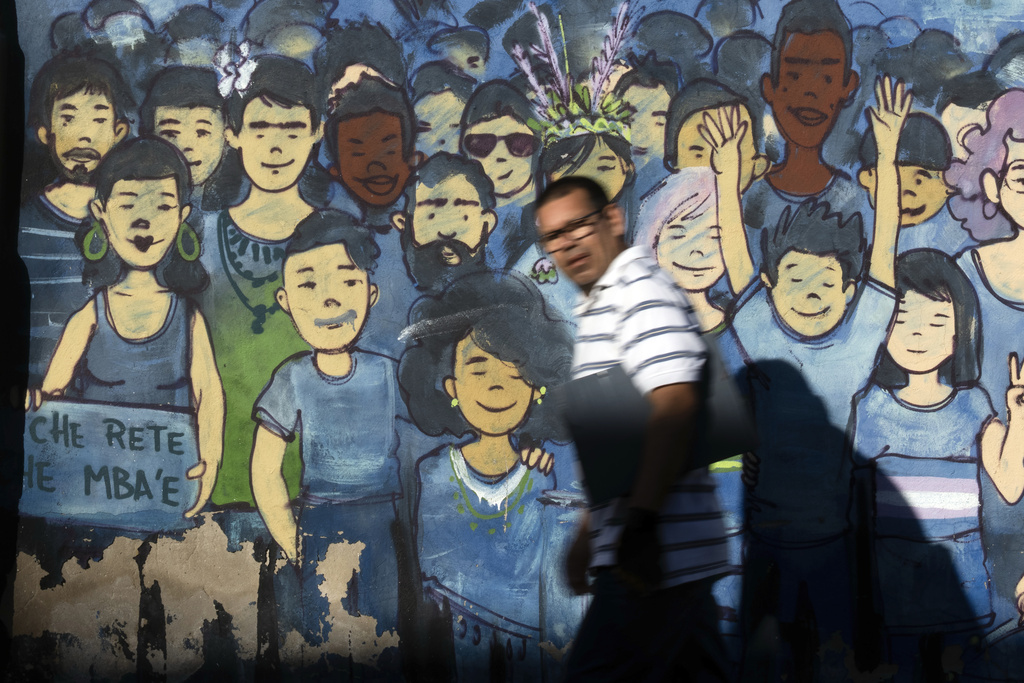
Guaraní is one of Paraguay’s two official languages alongside Spanish. But linguists warn that fluency among younger generations is slipping, so nationwide preservation efforts are underway.
Many Paraguayans believe that Guaraní carries a deep emotional significance. Yet because the language’s use remains primarily oral, it rarely appears in official documents, government records and literary works.
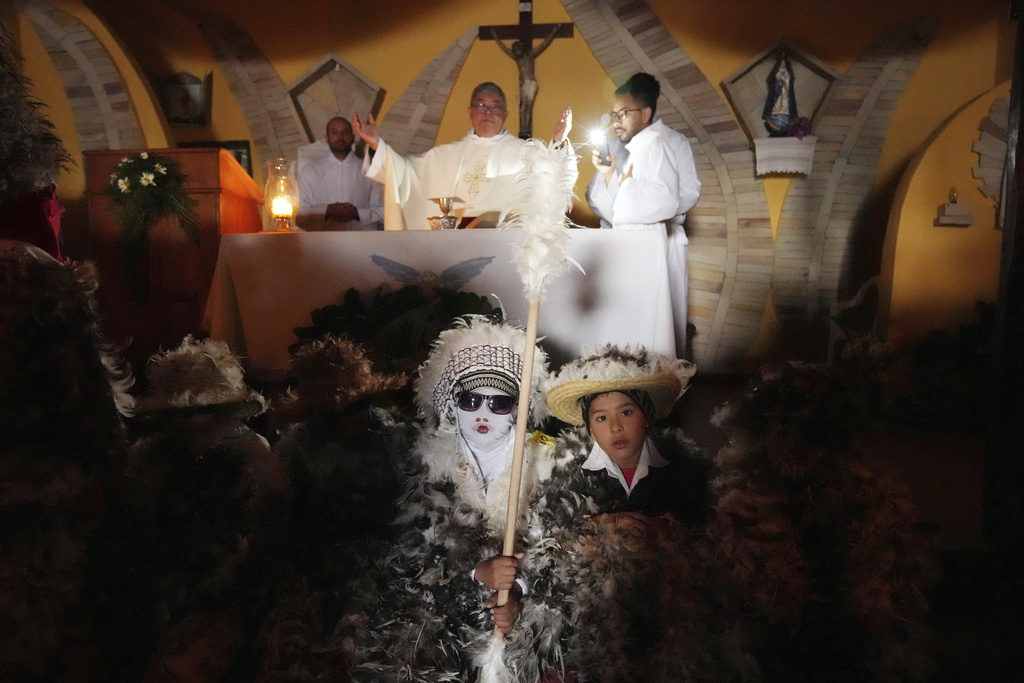
Even finding a Catholic priest who could preside over Gayoso’s wedding ceremony in Guaraní proved difficult. Still, it was worth the extra effort. Some guests told her that it was the first local wedding they had attended that was conducted entirely in their mother tongue.
Why Guaraní remains at the heart of Paraguay
Of the country’s 6.9 million people, about 1.6 million reported Guaraní as their main language, according to Paraguay’s official 2024 data. Whereas, 1.5 million use Spanish, and 2.1 million identify as bilingual. Other Indigenous languages account for the rest.
The Guaraní spoken today differs from the version that Europeans first encountered during the Latin American conquests in the 1500s. Still, its survival in a region where most countries shifted to Spanish is remarkable. Why has it managed to remain dominant?
“In the Guaraní culture, language is synonymous with soul,” said Arnaldo Casco, a researcher from Paraguay’s Department of Linguistics.
“The word is what the Lord bestowed on men, so we believe that, for the Guaraní people, losing their language was like losing their soul.”
Reflecting this deep connection to their language, the Guaraní people fiercely resisted learning Spanish. That’s why early European missionaries saw no other option but to learn Guaraní for evangelization purposes.
A language preserved yet punished
Jesuit and Franciscan priests produced Guaraní’s first written records in Paraguay.
The alphabet and dictionary they developed became essential for delivering sermons and helped preserve the language from extinction. Still, those efforts were not enough to shield Guaraní from centuries of marginalization that followed.
Casco said that close to 90% of the population were primarily Guaraní speakers by the early 19th century. But as the country regained its independence from Spain in 1811, efforts to promote its widespread use have been erratic.
While its use was encouraged to promote national unity during wartime in the 1930s, a postwar decree prevented teachers and students from using it in schools.
“My parents and other parents were tortured for not speaking Spanish,” said Miguel Ángel Verón, a linguistics researcher whose father was beaten in the mouth for communicating in Guaraní. “Why was not speaking Spanish his fault? He and my uncles ended up abandoning school.”
Spanish-Guaraní bilingual education became mandatory in 1992. Both languages are required in classrooms, but the law does not guarantee textbooks in Guaraní or foster widespread awareness of the need to preserve it.
Both Casco and Verón said that dozens of families no longer speak to their children in Guaraní. They fear the use of their mother tongue might hold them back from success, so they encourage them to learn English instead.
“Paraguay continues to suffer from a deep linguistic wound,” Verón said. “It might be easy to pass a law, but shifting our attitudes requires so much more.”
What language entails
Those working to preserve the language contend there’s more to Guaraní than words.
“The fundamental human values that we Paraguayans hold come from it,” Verón said. “Solidarity, reciprocity and a sacred respect towards nature.”
“Jarýi,” for example, is a Guaraní word that has no Spanish translation. It describes god-like protectors of the land, which according to some people like Verón’s father, needs years of rest in order to regain its wisdom and strength between harvests.
“If you destroy a forest to eat, you won’t be in any trouble. But if you do it just for the sake of it or to earn money, the jarýi will come,” Verón said.
Casco, too, learned various lessons from a medicine man that cured people in his hometown. “Knowing that prayer can heal is a legacy from the Indigenous people,” he said.
Across Paraguay’s rural areas, hundreds of other testimonies link language with faith. Yet no written records of those beliefs had been produced until now.
To create a register of those collective memories, Casco leads a project to interview Guaraní speakers over 60 years of age. His team has spoken to 72 people so far and the interviews will be published on the Department of Linguistics’ website when the transcripts are done.
“Our goal is to rescue the connection that we have with our roots and history through language,” Casco said.
Rescuing Guaraní
Several interviewees live in Loma Grande, the town where Ojeda and Gayoso wed.
Juana Giménez, 83, possesses a deep understanding of medicinal plants. Desperate parents with crying babies used to take their children to her. And Giménez, with a mix of herbs, smoke and prayer, helped reduce the stomach inflammation that so regularly brought them to tears.
Marta Duarte, 73, learned Spanish and moved to the capital city Asunción to work as a tailor for years. She came back to Loma Grande in her 30s and currently helps at the local church, where attendees read the Bible in Spanish and she discusses the passages in Guaraní.
Carlos Kurt, an 85-year-old descendant of German immigrants, fell in love with Paraguayan ancestral words at a young age. He still laughs as he recalls the day his second-grade teacher sent a note to his German-speaking parents: “Your boy is a good student, but he speaks way too much in Guaraní.”
“I just loved the language,” he said. “I learned it and nothing escaped me. Now my grandson does not speak it. He doesn’t like it.”
Other Paraguayans echoed how their descendants are letting go of the language, but Sofia Rattazzi is an exception. She lives in Asunción with her mother and grandmother, Nancy Vera, to whom she speaks only in Guaraní.
Following Vera’s beliefs in a concept known as “yvyguy» treasure — gold hidden by rich Paraguayans during wartime in the 1800s — the family regularly digs up holes in their backyard.
Vera has always had a particular closeness to the land, Rattazzi said, as it has previously signaled to her where jewelry might be. “She discovered places where the earth and water break and there lay rings and other stuff,” she said.
Rattazzi said her grandmother doubted participating in the language project, not knowing what good may come from the interviews. But she encouraged her.
“I want her to see how her own history matters,” Rattazzi said. “Now something will be left from her once she is gone.”
___
Associated Press religion coverage receives support through the AP’s collaboration with The Conversation US, with funding from Lilly Endowment Inc. The AP is solely responsible for this content.
 mthernandezr.com