Religious leaders released from Nicaraguan prison say their experience only strengthens their faith

José Luis Orozco, a pastor from Nicaragua, ministers to members of the Oasis Church, in Taylor, Texas, on June 15, 2025. (AP Photo/Rodolfo Gonzalez)

Published by The Associated Press, June 2025

Spanish story language here

God’s message didn’t immediately make sense to pastor José Luis Orozco. But when U.S. efforts resulted in his release from a Nicaraguan prison a few months later, everything became clear.

“The Lord had told me: ‘Don’t be afraid, José Luis. A wind will blow from the north, your chains will break and the doors will open,’” the pastor said from his new home in Austin, Texas.

By September 2024, he had spent nine months behind bars. With 12 other Nicaraguan members of the Texas-based evangelical Christian organization Mountain Gateway, he faced charges like money laundering and illicit enrichment. Just like them, other faith leaders had been imprisoned during a crackdown that organizations, such as Human Rights Watch, have said are attacks on religious freedom.

Orozco thought his innocence would eventually surface. So when the U.S. government announced that it had secured his release along with other political prisoners, he wasn’t completely surprised.

“That’s when I understood,” the pastor said. “God was telling me he would act through the United States.”

In the hours following the announcement, 135 Nicaraguans were escorted to Guatemala, where most sought paths to settle in other countries.

Why did Nicaragua imprison religious leaders? 

Tensions between President Daniel Ortega and Nicaraguan faith leaders began in 2018, when a social security reform sparked massive protests that were met with a crackdown. Relations worsened as religious figures rejected political decisions harming Nicaraguans and Ortega moved aggressively to silence his critics.

Members of Catholic and Evangelical churches have denounced surveillance and harassment from the government. Processions aren’t allowed and investigations have been launched into both pastors and priests. CSW, a British-based group that advocates for religious freedom, documented 222 cases affecting Nicaraguans in 2024.

“Religious persecution in Nicaragua is the cruelest Latin America has seen in years,” said Martha Patricia Molina, a Nicaraguan lawyer who keeps a record of religious freedom violations. “But the church has always accomplished its mission of protecting human life.”

Spreading the gospel

Orozco was the first member of his family to become evangelical. He felt called to the ministry at age 13 and convinced relatives to follow in his footsteps. He began preaching in Managua, urging different churches to unite.

His experience became key for Mountain Gateway’s missionary work. Founded by American pastor Jon Britton Hancock, it began operating in Nicaragua in 2013.

CSW had warned that religious leaders defending human rights or speaking critically of the government can face violence and arbitrary detention. But Hancock and Orozco said their church never engaged in political discourse.

While maintaining good relations with officials, Mountain Gateway developed fair-trade coffee practices and offered disaster relief to families affected by hurricanes.

By the time Orozco was arrested, his church had hosted mass evangelism campaigns in eight Nicaraguan cities, including Managua, where 230,000 people gathered with the government’s approval in November 2023.

An unexpected imprisonment

Orozco and 12 other members of Mountain Gateway were arrested the next month.

“They chained us hand and foot as if we were high-risk inmates,” he recalled. “None of us heard from our families for nine months.”

The prison where he was taken hosted around 7,000 inmates, but the cells where the pastors were held were isolated from the others.

The charges they faced weren’t clarified until their trial began three months later. No information was provided to their relatives, who desperately visited police stations and prisons asking about their whereabouts.

“We still had faith this was all a confusion and everything would come to light,” Orozco said.

“But they sentenced us to the maximum penalty of 12 years and were ordered to pay $84 million without a right to appeal.”

Preaching in prison

Fasting and prayer helped him endure prison conditions. Pastors weren’t given drinking water or Bibles, but his faith kept him strong. 

“The greatest war I’ve fought in my Christian life was the mental battle I led in that place,” Orozco recalled.

Guards didn’t prevent pastors from preaching, so they ministered to each other. According to the pastor, they were mocked, but when they were released, a lesson came through.

“That helped them see that God performed miracles,” he said. “We always told them: Someday we’ll leave this place.”

Molina said that several faith leaders who fled Nicaragua have encountered barriers imposed by countries unprepared to address their situation. According to the testimonies she gathered, priests have struggled to relocate and minister, because passports are impossible to obtain, and foreign parishes require documents that they can’t request.

But Orozco fared differently. He shares his testimony during the services he leads in Texas, where he tries to rebuild his life.

“I arrived in the United States just like God told me,” the pastor said. “So I always tell people: ‘If God could perform such a miracle for me, he could do it for you too.’”

Laymen were targets too

Onboard the plane taking Orozco to Guatemala was Francisco Arteaga, a Catholic layman imprisoned in June 2024 for voicing his concerns over Ortega’s restrictions on religious freedom.

“After 2018, when the protests erupted, I started denouncing the abuses occurring at the churches,” Arteaga said. “For example, police sieges on the parks in front of the parishes.”

Initially, he relied on Facebook posts, but later he joined a network of Nicaraguans who documented violations of religious freedom throughout the country.

“We did not limit ourselves to a single religious aspect,” said Arteaga, whose personal devices were hacked and monitored by the government. “We documented the prohibitions imposed on processions, the fees charged at church entrances and restrictions required inside the sanctuaries.”

Arteaga witnessed how police officers detained parishioners praying for causes that were regarded as criticism against Ortega.

According to CSW, the government monitors religious activities, putting pressure on leaders to practice self-censorship.

“Preaching about unity or justice or praying for the general situation in the country can be considered criticism of the government and treated as a crime,” said CSW’s latest report.

Building a new life

Prison guards also denied a Bible to Arteaga, but an inmate lent him his.

It was hard for him to go through the Scripture, given that his glasses were taken away after his arrest, but he managed to read it back-to-back twice. 

“I don’t even know how God granted me the vision to read it,” said Arteaga, who couldn’t access his diabetes medicine during his imprisonment. “That gave me strength.”

He eventually reunited with his wife and children in Guatemala, where he spent months looking for a new home to resettle. He recently arrived in Bilbao, Spain, and though he misses his country, his time in prison shaped his understanding of life.

“I’ve taken on the task, as I promised God in prison, of writing a book about faith,” Arteaga said. “The title will be: ‘Faith is not only believing.’”

____

Associated Press religion coverage receives support through the AP’s collaboration with The Conversation US, with funding from Lilly Endowment Inc. The AP is solely responsible for this content.
Their churches no longer feel safe. Now Nicaraguans are taking their worship home

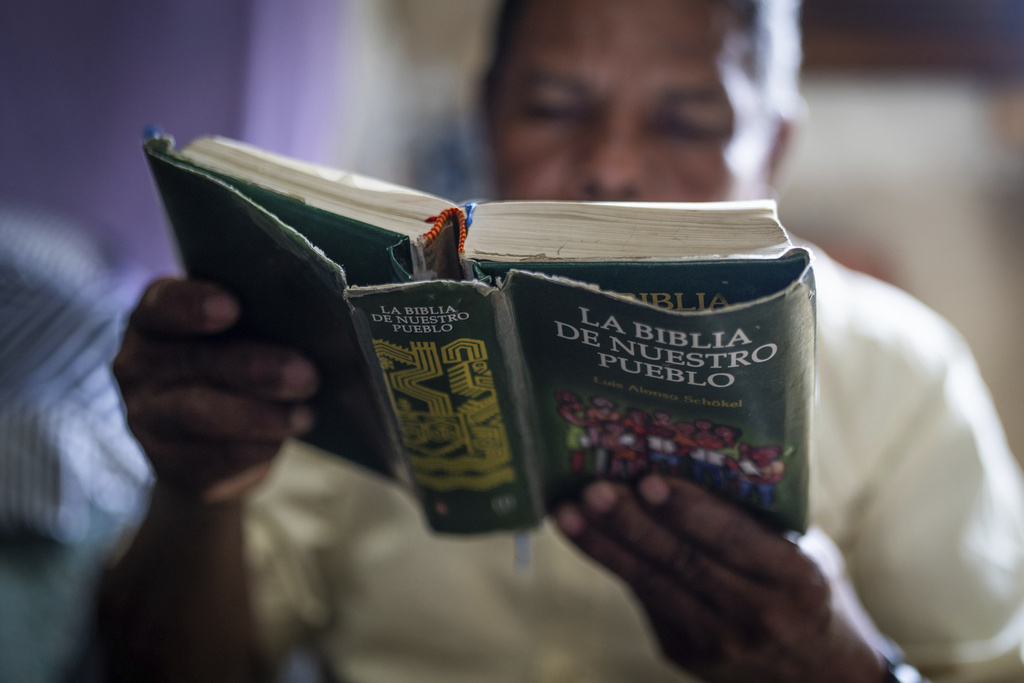
Nicaraguan exile Francisco Alvicio, a deacon of Nicaragua’s Moravian Church, reads a Bible in his rented room in San Jose, Costa Rica, Sunday, Sept. 22, 2024. (AP Photo/Carlos Herrera)

Published by The Associated Press, September 2024 (link aquí)

Spanish language story here

When their church no longer felt safe, deacon Francisco Alvicio and his congregation made a plan. Cautiously, discreetly, they took their worship to their homes.

“If I’m pursued at the church, I still have my Bible,” the 63-year-old Nicaraguan said.

Praying in hiding became his last resort before fleeing his country in 2023.

Like him, several evangelical pastors, Catholic priests and human rights organizations have denounced the surveillance, harassment and the imprisonment of Nicaraguan faith leaders in recent years.

“Arriving with a weapon is not kind-hearted,” Alvicio said from Costa Rica, where he currently lives. “If someone goes into a church wearing a uniform, speaking loudly, it’s to intimidate.”

The relationship between Nicaraguan religious communities and the government has been strained since President Daniel Ortega’s crackdown on massive street protests in 2018.

Ortega asked the Catholic Church to play a role as a mediator when political tensions arose, but the dialogue didn’t last long. After priests sheltered demonstrators inside their parishes and expressed concern about excessive use of force, Ortega targeted them as “terrorists” who backed opposition efforts to overthrow him.

Among evangelicals, relatively few pastors have openly supported the president. Most congregations have refrained from any political participation, though this has not prevented leaders from being imprisoned and hundreds of organizations from being closed.

In northern Nicaragua, where Alvicio was born, most of the Indigenous Miskito people are evangelicals. The Moravian Church — to which the deacon belonged — was established in Nicaragua in 1894. Until its closure alongside more than 1,600 nongovernmental organizations last August, it had about 350,000 members in the country.

For decades, Alvicio said, the Miskitos could profess their faith freely. Services took place every Wednesday, Friday and Sunday. Elders and children alike gathered at the church, where clergy read the Bible and ceremonies ended by singing a Miskito hymn.

Things started shifting when the government imposed new rules on the congregation. First came a tax that its members had never paid. Then, an order to replace their logo. 

“We did not accept,” Alvicio said. “We can’t change something just because the government wants to. The only path we follow is the one of God.”

Before long, black-clad strangers started showing up at his church. 

Those too afraid to attend a public service decided to pray at home. Some read their Bibles in solitude. Others with spare chairs turned their tiny houses into makeshift churches, calling in a few neighbors and leaders like Alvicio.

By changing venues every day, lowering their voices and gathering as early as 4 a.m. to avoid detection, they kept worshipping. How evangelicals have been affected by Ortega’s government

According to CSW, a British-based organization that advocates for religious freedom, violations against the faith practice of Nicaraguan Protestants have been less visible than those against the Catholic Church.

Anna Lee Stangl, CSW’s head of advocacy, noted in a recent publication that the Catholic Church is a single religious organization whose structure spreads geographically and has a clear, public hierarchy.

“The Protestant Church is made up of many different denominations and independent churches, some of which may be dominant in one part of the country and absent in another, and which do not necessarily work together or even communicate,” she said.

In both Catholic and Protestant communities, violations reported by organizations and faith leaders are similar: restrictions on the length, location and frequency of services; prohibition of processions; invasion of masked men into churches; theft or destruction of religious objects and infiltration of informants. 

“The situation has seriously worsened,” said Martha Patricia Molina, a Nicaraguan lawyer who keeps a record of religious freedom violations.

According to her latest report, 870 violations were committed against the Catholic Church between 2018 and 2024, and 100 against Protestants in the same period. 

Additionally, said human rights organization Nicaragua Nunca Más, more than 256 evangelical churches have been closed by the government in the past four years, while 43 Catholic groups have been targeted since 2022.

At least 200 religious leaders have fled Nicaragua, the organization said. More than 20 were stripped from their citizenship and 65 have been indicted for conspiracy and other charges.

The Nicaraguan government did not immediately respond to a request for comment.

An American pastor’s tale

Pastor Jon Britton Hancock didn’t see it coming.

How could he suspect that 11 pastors from his evangelical church could be arrested if Ortega’s government had greenlighted their operations for years?

He and his wife, both Americans and founders of Mountain Gateway, started working in Nicaragua in 2013. Two years later, they sent their first missionaries and began collaborating with local pastors. 

For the next decade, they developed fair-trade coffee practices, offered disaster relief to families affected by hurricanes and organized mass evangelism campaigns. 

But then, it all suddenly changed.

In December 2023, 11 of his church’s pastors and two lawyers were arrested; their families didn’t hear from them for months. It wasn’t until Sept. 5 that they were released on humanitarian grounds.

Hancock wondered why this happened. Though he never engaged in political discourse, he had preached in Congress and to the national police. He had met with officials. Ortega and his wife, Vice President Rosario Murillo, had sent notes congratulating him on his church’s work. 

“I think the real reason is the Gospel is a threat to totalitarian ideas,” Hancock said. “Our perspective is about personal relationship with God and it’s based on love. And love doesn’t thrive if there’s control or coercion.”

With Ortega’s measures against faith communities, he said, not only freedom is lost.

Confiscations by the government have been a blow to church investments. And, in many cases, pastors imprisoned or forced into exile are the providers for their homes.

Mountain Gateways’ local leader, Walder Blandon, was arrested with his wife, so they were both separated from their 2-month-old baby. He and his brother, who is two years older, had to be taken in by their grandmother, who had health issues, until their parents were released in September.

“So, whether or not the Nicaraguan government intends for people to be fearful, I can promise you that there is much fear and people are responding,” Hancock said.

He, too, has heard of multiple people holding house meetings to pray. Parishioners’ modest sound systems are no longer an option, he said, because a guitar or a piano could attract police asking for a registration, so congregations have gone underground. 

“It’s not very known what’s happening with evangelicals in Nicaragua,” he said. “Evangelical pastors don’t take their stands in the same way that Catholic priests do, so it’s kind of gone under the radar, but it’s certainly there.”There’s nothing left but leaving

One pastor had already gotten used to police watching his sermons and strangers listening to his conversations, but when someone told him “they’re after your head,” he decided he should flee.

“The government wants to control everything,” said the evangelical leader, who agreed to an interview on the condition his name and new home base be withheld for safety reasons. “They fear that if one speaks against the government, the people will rise.”

In his hometown, he said, he was targeted by informants who would seek to make his acquaintance, then surreptitiously use their phones to record sounds or video that the government might find of interest.

Now, with him gone, his family no longer goes to church. They worship at home and he joins them from a distance, praying for his people and the government, for justice and peace.

Alvicio, too, has kept his faith strong.

His church might be gone and he yearns to return to his country, but through his prayers, he remains tied to his land.

“We, the Moravians, believe that wherever we are, we can pray to God,” he said. “So I can walk and speak and think bearing that power, knowing that, even if I’m alone, he’ll be with me.”

____

Associated Press religion coverage receives support through the AP’s collaboration with The Conversation US, with funding from Lilly Endowment Inc. The AP is solely responsible for this content.

El temor no abandona a religiosos nicaragüenses en el exilio

Originalmente publicado en The Associated Press, marzo de 2023 (link aquí)

English story here.

El ventanal cubre de piso a techo y se extiende de pared a pared. 

El sacerdote al otro lado del vidrio escucha una confesión a la vista de todos, acercando la mano a un devoto que cierra los ojos para recibir la absolución. Por eso sorprende saber que el religioso en realidad está oculto. Llegó hace pocos días a esta parroquia extranjera para salvarse de las amenazas que recibía en su país. 

La organización de derechos humanos Nicaragua Nunca Más estima que él es uno entre medio centenar de religiosos nicaragüenses que se han exiliado desde 2018, cuando las insatisfacciones del pueblo despertaron una voz colectiva que se movilizó hasta las calles

En aquel entonces, el presidente Daniel Ortega acudió a la Iglesia católica para pedirle mediar entre manifestantes y gobierno, pero la relación se fracturó y el distanciamiento se convirtió en represión. 

El temor atraviesa las palabras del sacerdote hasta para pronunciar su propio nombre. El exilio le concedió distancia del acoso, pero la desconfianza y la tristeza viajaron con él en auto y motocicleta; caminaron a su lado cuando cruzó la frontera a pie. 

Sólo accede a una entrevista si su identidad y localización se mantienen en reserva. Su familia vive en Nicaragua y el precio de su seguridad es su silencio. 

“Hay persecución a la Iglesia porque la Iglesia es la voz del pueblo y, como decimos en Nicaragua, la voz del pueblo es la voz de Dios”, dice. 

El suyo es el segundo país más pobre de las Américas después de Haití, según el Banco Mundial. En ese territorio centroamericano viven casi siete millones de personas. Miles subsisten con menos de dos dólares al día y a todos les afecta la crisis política que ha derivado en sanciones internacionales y estancamiento de sectores como el turismo

Ante este panorama, explica el sacerdote anónimo, la iglesia ha dado palabras de consuelo y fortaleza. “Es la que ha tomado la batuta, la que ha sido siempre una esperanza en medio de tanto dolor”. 

—-

En el patio de las oficinas de Nicaragua Nunca Más en Costa Rica, una pared retrata los rostros de quienes murieron protestando hace cinco años. Lo plasmaron las madres de las víctimas, explica Yader Valdivia, defensor de derechos humanos que trabaja en el colectivo y vive en San José. 

De acuerdo con la Agencia de la ONU para los Refugiados, el número de nicaragüenses que hoy buscan protección en Costa Rica supera el que sumaron todos los extranjeros que pidieron refugio durante las guerras civiles de América Central en los años 80. Hasta febrero de 2022, la cifra alcanzó los 150.000.

Según diversas organizaciones, la represión del gobierno nicaragüense dejó al menos 355 muertos y 2.000 heridos en 2018. A la fecha, el presidente -que concentra el poder junto con su esposa y vicepresidenta, Rosario Murillo- justifica el uso de la fuerza asegurando que sus detractores pretendían orquestar un golpe de Estado.  

Ortega asumió el cargo en 2007 y, en unas elecciones que la comunidad internacional cuestionó, en 2021 obtuvo un cuarto mandato. Desde la convulsión social, su gobierno ha tomado acciones para silenciar a la crítica y la oposición: cárcel o arresto domiciliario para aspirantes presidenciales, cierres de medios de comunicación y acoso o prisión a líderes religiosos que reprueben su gestión. 

Valdivia precisa que entre los líderes exiliados también hay seminaristas y trabajadores de los templos. CSW, una organización internacional que analiza y defiende la libertad religiosa, coincide y añade en un reporte publicado en 2022 que el Estado ha criminalizado a pastores evangélicos y a religiosos de la Región Autónoma de la Costa Caribe Sur. Además, expulsó a dos congregaciones de monjas. 

Los cierres impuestos por el gobierno no sólo disolvieron siete radios católicas –que para las comunidades sin acceso a internet representaban el único modo de escuchar misa- sino también 50 iglesias evangélicas que tenían personería jurídica como asociaciones. “Ellos no lo han denunciado”, aclara Valdivia. “Por eso se visibiliza más la Iglesia católica”. 

—-

Como el sacerdote anónimo, docenas de líderes y feligreses han confiado sus testimonios a organizaciones como Nicaragua Nunca Más y CSW pidiendo que se proteja su identidad. 

Algunos de los agravios documentados incluyen la irrupción a templos que fueron baleados, robo de hostias y santos, grabación de misas para monitorear a sacerdotes, destrucción de objetos religiosos -como la Sangre de Cristo en la Catedral de Managua- y prohibición de procesiones

CSW agrega que los devotos no pueden colgar símbolos sagrados fuera de sus casas y a los detenidos se les niegan las visitas de un sacerdote o tener una Biblia en prisión. 

Las palabras de un líder religioso que defienda los derechos humanos tienen un precio. Un sacerdote narró con tristeza que autoridades aeroportuarias tiraron a la basura crucifijos bendecidos por el papa Francisco. Cuatro pastores aseguraron que los seguían hombres enmascarados. Uno más dijo haber hipotecado su finca para reunir dinero y dejar el país. 

—-

La tarde del primer encuentro, la monja prefiere no hablar. Titubea como si su cabeza hurgara entre recuerdos y dice que no quiere revivir la salida de su país. Al día siguiente, aún temerosa, accede si se le garantiza el anonimato. 

Cuenta que su comunidad era muy devota y cariñosa. “En cualquier lugar en el que nos vieran siempre nos saludaban”, dice. “Nos llamaban ‘madrecita’. Nosotras decíamos ‘díganos hermanas’, pero ellos tenían esa costumbre. Sentían que éramos una madre para ellos”.

Habla muy bajo, como si contara un secreto, y relata que trabajó en una casa de ancianos y una guardería. Salió por orden del gobierno y viajó por tierra, como el sacerdote anónimo, y ahora trata de rehacer su vida. 

“Rezo por mi país. Creo que todo el mundo, no sólo yo, para que vivamos tranquilos, en paz”.

—-

Desde una oficina en la parroquia que lo adoptó, el sacerdote anónimo dice que su nueva feligresía le ha recibido con alegría pero sus ojos se afligen cuando habla del hogar que dejó. 

“Es un pueblo sencillo, humilde, muy católico, muy lleno de Dios”, dice. “Extraño mi gente, mi nación”. 

Explica que ahí el gobierno impuso diversas restricciones. Patrullas que resguardan los templos. Policías vestidos de civiles que escuchan las eucaristías. Feligreses interrogados por autoridades para saber qué dicen los sacerdotes en misa.  

“Hay mucho temor, incluso entre los laicos que se pronuncian. También ellos son mal vistos y se les amenaza. Les mandan mensajes anónimos o cosas así”, asegura. “No podemos decir nada y, si se dice, ya sabemos cuál es la paga”.

—-

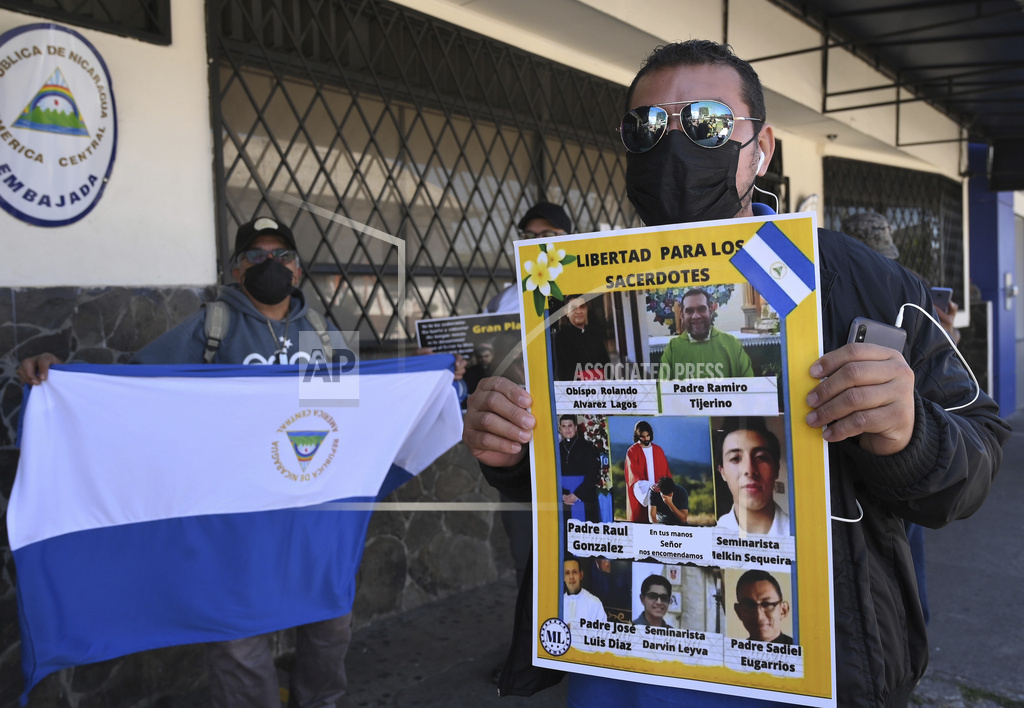
La imagen es la siguiente: el obispo está arrodillado fuera de su parroquia con los brazos en alto frente a policías armados, como si fuera un criminal al que hay que fusilar. Monseñor Rolando Álvarez aún no lo sabe, pero su nombre se imprimirá en la historia y su resistencia se convertirá en un símbolo. 

Es un jueves de agosto de 2022 y le basta su fe para plantar cara a los uniformados. Ellos cercan su templo para impedir la entrada de feligreses a misa, pero monseñor se las ingenia. Sale a la calle levantando la imagen del Santísimo y predica. Si los devotos se acercan, la policía los repele. 

Cuando las autoridades aumentan la presión, lo recluyen en su templo y él los bendice. “Aquí vamos a permanecer sin irrespetar a la policía”, dice ante una cámara. 

Él ya no recuperará su libertad. Tras un tiempo, el gobierno le dictará arresto domiciliario y meses después lo acusará de conspiración y propagación de noticias falsas. Luego lo encarcelará. 

En febrero de 2023, cuando el Estado libere y envíe a Estados Unidos a 222 líderes políticos, sacerdotes y otros disidentes, él no subirá al avión y el gobierno se lo cobrará con una sentencia de 26 años de prisión.  

Quizá sin que lo sepa, su ausencia potencia su lucha. Conforta el corazón de los exiliados que piensan: él sigue ahí, resistiendo por mi país. 

—-

Reynald Gaitán se describe así: exiliado, exseminarista, laico consagrado de Nicaragua y actual estudiante de Teología en Costa Rica. 

Habla con la pasión de un guerrillero que defiende su causa. “Yo siempre he dicho que hay estructuras de poder. Las denuncié cuando podía predicar en el templo donde estaba de encargado de servir en Estelí”. 

Cuenta que huyó porque despertó incomodidades y empezó a recibir amenazas. La gente lo buscaba porque necesitaba que alguien escuchara. Por ejemplo, la madre de un estudiante asesinado en las protestas.

“La gente, cuando no hallaba qué hacer, recurría al sacerdote para pedir consejo, para hallar consuelo. ‘Padre, ¿qué hacemos? Mi sobrino está preso. Ayúdenos’”. 

Algunos religiosos, sin saber cómo ayudar, lloraban, asegura Gaitán. Otros, como monseñor Álvarez, peleaban. 

Cuenta que el obispo vivió una primera represión contra la Iglesia durante la revolución en los años 80 y que tuvo que exiliarse en Guatemala. Al volver, se volcó en su pueblo y defendió a los jóvenes como la esperanza de su nación. 

“Monseñor predicaba en contra de que manipularan a los jóvenes para cuestiones ideológicas”, dice Gaitán. “Eso enfurecía a los que defienden la revolución porque para la revolución los caídos son mártires, pero para la Iglesia son víctimas”. 

Las convicciones del obispo, añade, incomodaron a algunos religiosos que pensaban que su conducta le traía sufrimiento a la Iglesia. 

Gaitán cree que la decisión de permanecer en prisión reitera su congruencia. “Si monseñor llegara a morir, la causa de él seguiría viviendo porque siempre lo vamos a recordar como el mártir de las causas”. 

—-

Hubo un tiempo en que Iglesia, pueblo y gobierno compartieron una mesa para hablar. 

Para menguar la convulsión de 2018, Ortega acudió a la Conferencia Episcopal y ésta accedió a reunir actores participantes en el diálogo, pero en ese espacio surgieron potentes voces opositoras –como la del estudiante Lesther Alemán— y ante el conflicto, los religiosos no guardaron silencio.  

Juan Diego Barberena, abogado y activista en Unidad Nacional Azul y Blanco, que aglutina movimientos que exigen libertad en Nicaragua, explica que desde 2014 la Iglesia alertó sobre la posible configuración de un régimen autoritario, una eventual manipulación del sistema electoral y la represión a activistas. 

Cuatro años después, durante las protestas, las iglesias sirvieron de refugio y Ortega comenzó a decir que los sacerdotes protegían a “terroristas” y eran “diablos con sotanas”. 

Lo que siguió después ocupó titulares internacionales. Una iglesia de Diriamba fue tomada por fuerzas gubernamentales. Enmascarados afines al Estado atacaron a religiosos encabezados por el cardenal Leopoldo Brenes cuando intentaban ayudar a manifestantes. Silvio Báez, obispo auxiliar de Matagalpa, resultó herido y luego denunció un intento de asesinato. 

Ahora él y otros religiosos viven exiliados en Estados Unidos, a donde parte de su feligresía se ha desplazado y en febrero llegaron algunos liberados por el gobierno, entre ellos, seis sacerdotes, dos seminaristas y un pastor. Se cree que dos padres, además de monseñor Álvarez, siguen encarcelados en Nicaragua. 

—-

¿Por qué el gobierno nicaragüense persigue a religiosos? 

Barberena explica que “hay un afán de constituir un régimen totalitario, donde todos los espacios públicos y sociales sean controlados”. Agrega que la represión pretende evitar que desde la Iglesia se generen mensajes que reafirmen la convicción de la gente, pero el gobierno olvida que también los sacerdotes son ciudadanos que viven la problemática social y que su feligreses les cuentan sus vivencias.

“En las comunidades donde el Estado no existe, la gente se acerca a su guía espiritual”, explica. 

Varios religiosos han expresado que sólo desean profesar su fe, pero el gobierno insiste en calificar a todos como opositores. “En el caso concreto de monseñor Álvarez, él sí toma una posición política porque es inevitable”, dice Barberena. “Me recuerda a monseñor Romero en El Salvador”. 

Como él, otros analistas coinciden en que la permanencia de Álvarez en Nicaragua podría ser problemática para Ortega. 

Según Yader Valdivia, de Nicaragua Nunca Más, el obispo representa la reserva moral, social y espiritual del país. Mientras la Conferencia Episcopal guarda silencio y el Vaticano se pronuncia con cautela, él es un símbolo de lucha en un territorio donde se ha eliminado la libertad de prensa, se cancelaron las organizaciones de derechos humanos y miles se han exiliado. 

La voluntad del obispo, finaliza Barberena, envía un mensaje. “Él dijo: yo me quedo en Nicaragua y asumo mis costos; asumo los costos por el resto de la ciudadanía”.

—-

Según han narrado algunos religiosos a Nicaragua Nunca Más, ellos dejaron su país como cualquier migrante. La jerarquía de su iglesia no intercedió por ellos ante la Conferencia Episcopal de otro país ni les facilitó recursos. 

“Ellos se ponen a disposición de algunas iglesias”, explica Valdivia. “A algunos los han acogido, pero otros viven en situaciones precarias, viendo de qué pueden trabajar, cómo pueden vivir”. 

Cuenta que muchos huyen sólo con lo que traen, sin ropa ni dinero, y viajan solos para no exponer a su familia a las calamidades del trayecto. 

–—

El sacerdote anónimo no pudo despedirse de su pueblo. Salió a escondidas, apresurado, y sólo con la persona que lo transportó. 

Dice que las amenazas empezaron cuando se refirió a la situación de la Iglesia en sus homilías. “Cualquier cosa que aluda a lo que está mal, es mal visto. No podía decir nada pero lo dije y ya está cincelado. Por eso estoy acá”. 

A los devotos que acudían a él –desconsolados en su mismo país roto- les decía lo que se dice a sí mismo: Dios acompaña, fortalece; hay que luchar. “Como dice el apóstol Pablo: si Dios es con nosotros, ¿quién contra nosotros?”. 

Al terminar la charla se cambia de ropa y se dirige al templo, donde cientos esperan su misa. 

Cuando alcanza las puertas de ésta, su nueva iglesia, el canto de una mujer rebota en las paredes y él se hace camino con la vista al frente. 

____

AP Foto: Carlos González

La cobertura de noticias religiosas de The Associated Press recibe apoyo a través de una colaboración con The Conversation US, con fondos del Lilly Endowment Inc. La AP es la única responsable de todo el contenido.